US approves AMRAAM weapons for Japan
Boeing and Mitsubishi Heavy Industries are supporting Japan's F-15J upgrade. (Photo: Boeing)
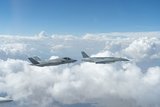
Japan is investing in AMRAAM weapons to equip F-35, F-2, and F-15J fighter jets.


The US State Department has cleared Japan to buy AIM-120C-7/8 Advanced Medium-Range Air-to-Air Missiles (AMRAAM) in an deal estimated at $293 million.
Tokyo has requested to buy 150 of the weapons, three AMRAAM guidance sections, missile containers, control sections and other support equipment.
The weapon can be fitted on Japan Air Self-Defense Force F-35, F-15J and F-2 fighter jets.
‘The proposed sale will improve Japan’s capability to meet current and future threats by defending the Japanese homeland and U.S. personnel stationed there,’ said a US State Department notice. ‘Japan already has AMRAAMs in its inventory and will have no difficulty absorbing these missiles into its armed forces.’
Raytheon is listed as the principal contractor on the prospective deal.
Related Equipment in Defence Insight



More from Air Warfare
-
![Quantum Systems details 480km/h Ukrainian interceptor as production scales up]()
Quantum Systems details 480km/h Ukrainian interceptor as production scales up
Quantum Systems’s Ukraine-made interceptor SPYS is thought to cost approximately 10 times less than Russia's jet-powered uncrewed aerial systems and is being produced at scale.
-
![UK eyes lightweight satellite communications for UAVs]()
UK eyes lightweight satellite communications for UAVs
The UK is seeking to extend the operational reach of uncrewed aerial vehicles, reflecting growing demand for compact, energy-efficient technology to support beyond-line-of-sight operations.
-
![The new generation of defence companies emerging from the US UAV boom]()
The new generation of defence companies emerging from the US UAV boom
As the Pentagon accelerates procurement of low-cost, lethal UAVs through its Drone Dominance Program, emerging suppliers will need to demonstrate manufacturing capacity, supply chain resilience and reliability.