US approves $4.9 billion E-7 AEW&C sale to South Korea
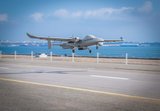
The Boeing E-7 AEW&C aircraft will join South Korea’s existing fleet of four E-7 ‘Peace Eye’ aircraft. (Photo: Boeing)
The purchase of the four aircraft will also include 10 CFM56 engines, alongside aircraft countermeasures, GPS navigation systems, and related logistic and programme support.


The US Department of State has approved South Korea’s request to buy four E-7 Airborne Early Warning & Control (AEW&C) aircraft at an estimated cost of US$4.9 billion.
The purchase of the aircraft will also include 10 CFM56 engines, eight installed on the aircraft and two spare, GPS navigation systems, aircraft countermeasures and radio systems alongside related logistic and programme support.
The sale to South Korea will serve to support the US’ foreign policy goals and national security objectives “by improving the security of a major ally that is a force for political stability and economic progress in the Indo-Pacific region”, the Defence Security Cooperation Agency (DSCA) said in a statement.
The E-7 Wedgetail as an AEW&C aircraft will also, according to the DSCA, increase South Korea’s C4ISR interoperability with the US, as well as improve the country’s own intelligence, surveillance and reconnaissance, and AEW&C capabilities.
Boeing will be the primary contractor for the deal and Congress have been informed of the sale, the DSCA added.
The announcement came at a time when South Korea was looking to expand its AEW&C fleet by adding to its four E-7 ‘Peace Eye’ aircraft. Boeing’s E-7 ‘Wedgetail’ is one of three competitors for the AEW&C II requirement, with the other two being Saab’s GlobalEye and IAI’s business jet solution.
In October, Saab signed a Memorandum of Understanding (MoU) with Korean Aerospace Industries (KAI) which would allow for KAI to support Saab in delivering its GlobalEye aircraft should it be selected for the AEW&C II programme.
Related Programmes in Defence Insight
Related Equipment in Defence Insight

More from Air Warfare
-
![July drone digest: Sovereign production takes centre stage at Farnborough]()
July drone digest: Sovereign production takes centre stage at Farnborough
Farnborough International Airshow (FIA) 2026 revealed the growing scale of the UK’s uncrewed ambitions, with companies showcasing new CCA, autonomous wingmen and surveillance drones, while sovereign production emerged as a key factor for multiple programmes.
-
![FIA 2026: Bell highlights MOSA-driven growth path for MV-75 Cheyenne]()
FIA 2026: Bell highlights MOSA-driven growth path for MV-75 Cheyenne
Bell Flight’s modular open-systems approach for the US Army’s MV-75 Cheyenne could open doors for international allies and suppliers once locked out by closed rotorcraft architectures.
-
![Maximise survivability with advanced electronic warfare (video)]()
Maximise survivability with advanced electronic warfare (video)
BAE Systems’ all-digital EW delivers 360-degree threat awareness in contested environments, boosts survivability, and cuts lifecycle costs.
-
![US Air Force seeks avionics upgrades for ageing T-38 Talon as T-7A Red Hawk delays persist]()
US Air Force seeks avionics upgrades for ageing T-38 Talon as T-7A Red Hawk delays persist
The USAF is looking for commercial avionics solutions to improve the T-38 Talon’s reliability, readiness and flight safety as continued T-7A Red Hawk delays increase the likelihood that the legacy trainer will remain in service longer than planned.
-
![British Army’s Project Corvus selection highlights new era of drone sovereignty]()
British Army’s Project Corvus selection highlights new era of drone sovereignty
The UK’s choice of the Tekever AR5 for Project Corvus reflects a wider shift in military drone procurement towards solutions that centre on sovereignty and domestic production, moving away from overseas reliance.