US Air Force fighter unit transitions to aggressor squadron
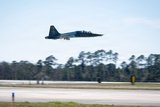
The 706th Aggressor Squadron's primary objective will be to specialise in understanding, instructing and simulating adversaries' tactics employing fourth-generation aggressor aircraft. (Photo: US DoD)
The 926th Wing’s 706th Fighter Squadron has been redesignated as the 706th Aggressor Squadron, enhancing Nellis Air Force Base’s air combat training capabilities.


The USAF 926th Wing’s 706th Fighter Squadron has been officially redesignated as the 706th Aggressor Squadron, marking a significant shift in its mission.
The ceremony took place at Nellis AFB and signalled the squadron’s transition into its new role, effective from 14 May.
As the third aggressor squadron at Nellis, the 706th Aggressor Squadron’s primary objective will be to specialise in understanding, instructing and simulating adversaries’ tactics employing fourth-generation aggressor aircraft.
This strategic realignment enables the 64th and 65th Aggressor Squadrons to focus on developing advanced air defence capabilities, supporting Nellis’s ambitions of becoming the 5th Generation Center of Excellence.
The process of integrating the 706th Aggressor Squadron into the larger operational framework began over a year ago when cyberspace operations officers and cyber warfare operations airmen from the 706th Fighter Squadron transitioned to offensive cyber operations alongside the 57th Information Aggressor Squadron.
According to Lt Col Birckett, these cyber professionals play a vital role in identifying and exploiting vulnerabilities within mission systems, both in terms of software and hardware, to enhance training for future conflicts.
The establishment of the flying component of the 706th Aggressor Squadron represents the second phase of this integration plan.
With its ownership of fighter aircraft, the 706th joins the ranks of the USAF’s four aggressor squadrons. By the end of this year, the squadron is set to receive its fleet of F-16 Block 30s, which will be instrumental in fulfilling their dedicated mission.
The squadron’s flying operations were relocated from New Orleans Naval Air Station to Nellis in 2007, and it is currently assigned to the 926th Operations Group.


More from Air Warfare
-
![July drone digest: Sovereign production takes centre stage at Farnborough]()
July drone digest: Sovereign production takes centre stage at Farnborough
Farnborough International Airshow (FIA) 2026 revealed the growing scale of the UK’s uncrewed ambitions, with companies showcasing new CCA, autonomous wingmen and surveillance drones, while sovereign production emerged as a key factor for multiple programmes.
-
![July air forces review: Farnborough steals the headlines as programmes develop]()
July air forces review: Farnborough steals the headlines as programmes develop
The biannual Farnborough International Airshow 2026 was the backdrop in July for scores of deals, partnerships and announcements, including developments in the multinational next-generation Global Combat Air Programme and the UK’s $486 million trainer aircraft requirement.
-
![FIA 2026: Bell highlights MOSA-driven growth path for MV-75 Cheyenne]()
FIA 2026: Bell highlights MOSA-driven growth path for MV-75 Cheyenne
Bell Flight’s modular open-systems approach for the US Army’s MV-75 Cheyenne could open doors for international allies and suppliers once locked out by closed rotorcraft architectures.
-
![Maximise survivability with advanced electronic warfare (video)]()
Maximise survivability with advanced electronic warfare (video)
BAE Systems’ all-digital EW delivers 360-degree threat awareness in contested environments, boosts survivability, and cuts lifecycle costs.
-
![US Air Force seeks avionics upgrades for ageing T-38 Talon as T-7A Red Hawk delays persist]()
US Air Force seeks avionics upgrades for ageing T-38 Talon as T-7A Red Hawk delays persist
The USAF is looking for commercial avionics solutions to improve the T-38 Talon’s reliability, readiness and flight safety as continued T-7A Red Hawk delays increase the likelihood that the legacy trainer will remain in service longer than planned.