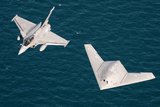
US Air Force discloses causes of 2023 CV-22 Osprey accident in Japan
A CV-22 Osprey flying a training mission near San Diego, California. (Photo: US Air Force)
The investigation report pointed to a gearbox failure and management issues as the main causes of the accident.


The US Air Force (USAF) last week released the results of the investigation of the CV-22B Osprey accident in November 2023 in Japan. The incident killed eight crew members and led the Pentagon toward standing down its entire tiltrotor fleet for four months.
The USAF report concluded that multiple causes contributed to the accident including a “catastrophic failure of the left-hand proprotor gearbox”, inadequate risk management and ineffective crew resource management.
After analysing maintenance logs, flight recorder data, briefing materials and inspecting aircraft wreckage, a multi-disciplinary team of subject matter experts found that an issue with the gearbox generated a rapidly cascading failure
Already have an account? Log in
Want to keep reading this article?

More from Air Warfare
-
![UK Royal Navy notes hybrid air wing progress with eyes on Peregrine drone development]()
UK Royal Navy notes hybrid air wing progress with eyes on Peregrine drone development
The Royal Navy’s Maritime Aviation Transformation (MATX) initiative aims to modernise aviation capabilities to use uncrewed systems where possible, supporting its goal of a hybrid air wing by 2040.
-
![Middle East UAV market underscored by $17bn in unsigned deals]()
Middle East UAV market underscored by $17bn in unsigned deals
While several UAV programmes remain unawarded in the Middle East, Saudi Arabia is forecast to be the biggest spender with its potential MQ-9B and Gambit deals overshadowing others in the region.
-
![February Drone Digest: US manufacturers face the Gauntlet and find success abroad]()
February Drone Digest: US manufacturers face the Gauntlet and find success abroad
The US launched the Gauntlet test in February as part of its accelerated attack drone procurement effort while also exploring various naval capabilities that could lead to procurements down the line. Shield AI’s V-Bat, meanwhile, has been stirring up global interest.
-
![Further investments in OWE and launchers to boost British Army deep fires capability]()
Further investments in OWE and launchers to boost British Army deep fires capability
Two contracts are expected to be signed by March 2026 that will help bolster the force’s capabilities, with further trials of the launcher expected across other departments.
-
![Scaling for diverse fleet needs: How many CCA will be acquired per crewed aircraft?]()
Scaling for diverse fleet needs: How many CCA will be acquired per crewed aircraft?
There is currently no industry standard in the ratio of uncrewed to crewed aircraft. Because collaborative combat aircraft vary widely in capability and crewed-uncrewed teaming availability, while country-specific requirements vary, it is unlikely that a single CCA configuration will meet all operational needs.