Turkey considers ditching F-16 Block 70 request in favour of non-US alternative
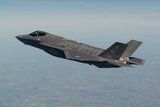
Possible alternative choices to the F-16 Block 70 could be the Eurofighter Typhoon, Dassault Rafale, the Russian Su-35 or the Chinese J-10. (Photo: USAF)
Turkish officials are signalling dissatisfaction and contemplating abandoning plans to purchase F-16 Block 70s from the US as the deal stalemates, and the country faces hard economic decisions.


Click here for Shephard’s in-depth background file on the F-16.
Turkish presidential security and foreign policy adviser Cagri Erhan recently said that the request sent to the US to acquire F-16 Block 70s was a mistake as the deal remains in deadlock and his country continues to battle with the aftermath of the recent earthquakes.
Many Turkish officials share this sentiment and have expressed it explicitly as US lawmakers continue to block the potential $20 billion sale of F-16 fighters.
Defence Minister Hulusi Akar said in February that ‘the F-16 is not the only option’, adding that ‘we expect common sense to
Our news & analysis is now part of Defence Insight®
A Basic-level or higher Defence Insight subscription is now required to view this content.



More from Air Warfare
-
![AUSA 2026: New multiwarhead loitering munition enters increasingly competitive market]()
AUSA 2026: New multiwarhead loitering munition enters increasingly competitive market
Heaviside Industries has unveiled its new Tyr loitering munition at AUSA 2026 in Washington, DC, joining a growing field of manufacturers seeking to capitalise on billions of dollars in anticipated military spending.
-
![Middle Eastern demand opens fresh export prospects for Lockheed Martin’s F-35 fighter jet]()
Middle Eastern demand opens fresh export prospects for Lockheed Martin’s F-35 fighter jet
A proposed Saudi Arabian purchase of 48 stealth fighters could signal a broader regional opportunity for the F-35 as European programmes mature.
-
![US military plans multi-UAV trials with Northrop Grumman quantum-navigated Lumberjack]()
US military plans multi-UAV trials with Northrop Grumman quantum-navigated Lumberjack
An undisclosed US military branch is preparing to evaluate multiple Lumberjack Group 3 drones equipped with SandboxAQ’s AQNav magnetic-navigation system. Shephard spoke with Northrop Grumman and SandboxAQ to find out more.
-
![Akinci: How Baykar turned the UAV into an African and Middle Eastern export success]()
Akinci: How Baykar turned the UAV into an African and Middle Eastern export success
From billion-dollar industrial partnerships in the Middle East to rapid military off-the-shelf deliveries in Africa, Baykar has tailored the Akinci to the needs of very different customers. Defence Insight data shows how flexibility, price and Turkish supply-chain independence have helped drive exports.