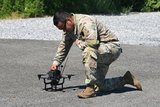
Timor-Leste’s fledgling air force receives a boost
The fledgling Air Component of the F-FDTL will receive a humble Cessna 206 aircraft. (Photo: US Embassy in Dili)
The Air Component of Timor-Leste’s military is doubling in size thanks to the addition of another Cessna aircraft.


After achieving independence in 2002, Timor-Leste has relied on foreign-funded air services. However, the Timor-Leste Defence Force (F-FDTL) will receive a Cessna 206 aircraft to help strengthen its tiny air force.
The US is supplying the aircraft, and Timor-Leste military personnel are now training at Plymouth, Massachusetts.
The Cessna of 2019 vintage bears the serial number ‘N962CS’. The second-hand grey-painted aircraft will join a single Cessna 172P already operated by the F-FDTL.
The 206’s registration number belongs to Technology Services Corporation (TSC), which operates a handful of surveillance aircraft in the region on behalf of the US government and the
Our news & analysis is now part of Defence Insight®
A Basic-level or higher Defence Insight subscription is now required to view this content.


More from Air Warfare
-
![The new generation of defence companies emerging from the US UAV boom]()
The new generation of defence companies emerging from the US UAV boom
As the Pentagon accelerates procurement of low-cost, lethal UAVs through its Drone Dominance Program, emerging suppliers will need to demonstrate manufacturing capacity, supply chain resilience and reliability.
-
![AUSA 2026: New multiwarhead loitering munition enters increasingly competitive market]()
AUSA 2026: New multiwarhead loitering munition enters increasingly competitive market
Heaviside Industries has unveiled its new Tyr loitering munition at AUSA 2026 in Washington, DC, joining a growing field of manufacturers seeking to capitalise on billions of dollars in anticipated military spending.
-
![US military plans multi-UAV trials with Northrop Grumman quantum-navigated Lumberjack]()
US military plans multi-UAV trials with Northrop Grumman quantum-navigated Lumberjack
An undisclosed US military branch is preparing to evaluate multiple Lumberjack Group 3 drones equipped with SandboxAQ’s AQNav magnetic-navigation system. Shephard spoke with Northrop Grumman and SandboxAQ to find out more.