Thai navy to buy more Camcopters
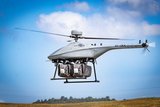
Thailand’s navy will double its Camcopter S-100 fleet to a total of four systems. (Schiebel)
The Royal Thai Navy operates a mixed fleet of UAVs, but it is adding more Austrian-built Camcopters to the mix.


The Royal Thai Navy (RTN) is preparing to procure two additional Camcopter S-100 UAVs from Schiebel to enhance its reconnaissance capability and patrol sea areas in Thailand’s south.
The House of Representatives agreed to spend a total budget of THB570 million ($18.38 million) for these systems in August.
The RTN procured its first two Camcopter S-100s for THB600 million ($19.4 million) in 2020. Their main operating station is Pak Phanang District in Nakhon Si Thammarat Province, where they operate with RTN frigates.
The Camcopter S-100 is the RTN’s first VTOL UAV. With its 200km range, the navy deploys them in
Our news & analysis is now part of Defence Insight®
A Basic-level or higher Defence Insight subscription is now required to view this content.

More from Air Warfare
-
![E-3 Sentry encryption equipment no longer meets US security requirements, says USAF]()
E-3 Sentry encryption equipment no longer meets US security requirements, says USAF
The US Air Force says the Sentry fleet’s DAR-400 encryptor can no longer keep pace with changing security requirements and warns that a failure could affect US operations and data security.
-
![New US Army UH-60M Black Hawk order bridges uncertain path to MV-75 transition]()
New US Army UH-60M Black Hawk order bridges uncertain path to MV-75 transition
The US$234 million award for 16 Sikorsky UH-60Ms preserves near-term production, but funding uncertainty and an undefinitised contract leave the US Army’s long-term Black Hawk requirements unresolved.
-
![Rafale AI trials highlight shift towards operational fighter testbeds]()
Rafale AI trials highlight shift towards operational fighter testbeds
Dassault’s latest Rafale trials join Gripen E and F-16 testing as developers explore how artificial intelligence could support and control combat aircraft.
-
![V-22 Osprey safety upgrade moves towards wider fleet installation under $35.5 million deal]()
V-22 Osprey safety upgrade moves towards wider fleet installation under $35.5 million deal
Bell Boeing will supply 73 additional ODSSHI kits as NAVAIR prepares to introduce predictive drive-system monitoring across US and Japanese V-22 fleets.
-
![AFA 2026: US Air Force examines uncrewed cargo aircraft for contested logistics]()
AFA 2026: US Air Force examines uncrewed cargo aircraft for contested logistics
The US Air Force is evaluating demonstrators for uncrewed cargo missions as it considers logistics requirements across the Pacific and other contested environments.