TEI unveils new turbofan with MIUS in mind
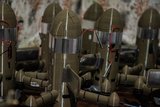
TUSAS Engine Industries announced its new TF-6000 turbofan on 10 June. (Photo: TEI)
The TF-6000 turbofan engine from Tusas Engine Industries features fewer compressor stages than rival powerplants.


Turkish engine manufacturer Tusas Engine Industries (TEI) unveiled its new TF-6000 turbofan engine on 10 June, with a social media post showing a 1:1 mockup of the engine.
The new engine — the first of its kind made in Turkey — will be capable of producing up to 6,000lb (2,720kg) of thrust or 10,000lb with an afterburner enabling supersonic speeds, TEI claimed on Twitter.
Its statement also emphasised that the new engine and its derivatives will be capable of powering ‘various national platforms’ from aircraft to ships.
TEI launched the TF-6000 Project two years ago with the Turkish defence procurement
Our news & analysis is now part of Defence Insight®
A Basic-level or higher Defence Insight subscription is now required to view this content.

You may also like

More from Air Warfare
-
![Attack drones versus CUAS – the future of warfare or just another trend?]()
Attack drones versus CUAS – the future of warfare or just another trend?
Demand signals for counter-drone technology are strong and the market is becoming crowded, but is this really the beginning of a new phase of warfare or will commentators be talking about something else 10 years from now?
-
![The 2020s: a decade of UAV spending growth]()
The 2020s: a decade of UAV spending growth
Total annual drone spending has increased nearly sixfold since the start of the decade, from $2.9 billion in 2020 to $16.3 billion in 2028, with Europe leading the rise.
-
![USAF opens B-52 upgrade to new companies as major programmes fall behind schedule]()
USAF opens B-52 upgrade to new companies as major programmes fall behind schedule
The US Air Force is seeking additional contractors to support communications upgrades for the B-52, while multiple Stratofortress modernisation programmes continue to experience delays, cost growth and technical challenges.
-
![July drone digest: Sovereign production takes centre stage at Farnborough]()
July drone digest: Sovereign production takes centre stage at Farnborough
Farnborough International Airshow (FIA) 2026 revealed the growing scale of the UK’s uncrewed ambitions, with companies showcasing new CCA, autonomous wingmen and surveillance drones, while sovereign production emerged as a key factor for multiple programmes.
-
![July air forces review: Farnborough steals the headlines as programmes develop]()
July air forces review: Farnborough steals the headlines as programmes develop
The biannual Farnborough International Airshow 2026 was the backdrop in July for scores of deals, partnerships and announcements, including developments in the multinational next-generation Global Combat Air Programme and the UK’s $486 million trainer aircraft requirement.