Taiwan expands its UAV inventory to meet future threats
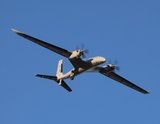
The Albatross II from NCSIST is designed for maritime surveillance and reconnaissance missions. (Photo: Charles Au)
Taiwan is busy developing new types of UAVs to equip its armed forces.


Taiwan’s policy of developing autonomous systems has become more aggressive over the past two years, as evidenced by the National Chung-Shan Institute of Science and Technology (NCSIST) displaying five upgraded UAV platforms in Taichung this week.
One new UAV was the Albatross II, a larger version with a different appearance compared to the Albatross I. It will be tasked with maritime surveillance and reconnaissance missions thanks to its 300+km range and 16h endurance.
The Albatross II’s FLIR payload is mounted farther forward towards the nose, as the original belly position has been taken by what is believed to be
Our news & analysis is now part of Defence Insight®
A Basic-level or higher Defence Insight subscription is now required to view this content.



More from Air Warfare
-
![Sophistication versus simplification: the divided future of air-to-air missiles]()
Sophistication versus simplification: the divided future of air-to-air missiles
As global air combat operations continue to evolve at a rate not seen for decades, what will the next generation of air-to-air weapons look like, and what missions will they need to fulfil?
-
![AUSA 2026: New multiwarhead loitering munition enters increasingly competitive market]()
AUSA 2026: New multiwarhead loitering munition enters increasingly competitive market
Heaviside Industries has unveiled its new Tyr loitering munition at AUSA 2026 in Washington, DC, joining a growing field of manufacturers seeking to capitalise on billions of dollars in anticipated military spending.
-
![Middle Eastern demand opens fresh export prospects for Lockheed Martin’s F-35 fighter jet]()
Middle Eastern demand opens fresh export prospects for Lockheed Martin’s F-35 fighter jet
A proposed Saudi Arabian purchase of 48 stealth fighters could signal a broader regional opportunity for the F-35 as European programmes mature.
-
![US military plans multi-UAV trials with Northrop Grumman quantum-navigated Lumberjack]()
US military plans multi-UAV trials with Northrop Grumman quantum-navigated Lumberjack
An undisclosed US military branch is preparing to evaluate multiple Lumberjack Group 3 drones equipped with SandboxAQ’s AQNav magnetic-navigation system. Shephard spoke with Northrop Grumman and SandboxAQ to find out more.
-
![Akinci: How Baykar turned the UAV into an African and Middle Eastern export success]()
Akinci: How Baykar turned the UAV into an African and Middle Eastern export success
From billion-dollar industrial partnerships in the Middle East to rapid military off-the-shelf deliveries in Africa, Baykar has tailored the Akinci to the needs of very different customers. Defence Insight data shows how flexibility, price and Turkish supply-chain independence have helped drive exports.