South Korea UCAVs will team up with KF-21 fighters
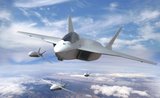
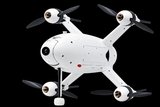
The Kaori-X (which translates as Stingray-X) is a stealthy UCAV in development in South Korea. (ADD)
South Korea continues to innovate with autonomous technology, and this includes assigning UCAVs to accompany KF-21 fighters.


South Korea’s Ministry of National Defense revealed on 23 December 2021 that an indigenous UCAV presently under development will combine with future KF-21 Boramae fighters as ‘loyal wingmen’.
The stealthy UCAV known as the Kaori-X has been under development since at least the mid-2010s. It is understood to be a joint development by the Agency for Defense Development and the Korean Air Aerospace Division (KAL-ASD).
Using AI, the UCAV is designed to penetrate enemy air defence networks, strike enemy radars and engage in dogfights with other UAVs. Shephard earlier reported that it is supposed to be ready by 2025.
Meanwhile, the development
Our news & analysis is now part of Defence Insight®
A Basic-level or higher Defence Insight subscription is now required to view this content.


More from Air Warfare
-
![Germany could secure greater influence through sixth-generation fighter partnership with Sweden and Spain]()
Germany could secure greater influence through sixth-generation fighter partnership with Sweden and Spain
Germany is assessing potential pathways for a future sixth-generation fighter capability, including discussions with GCAP partners and Sweden.
-
![Loyal wingman programmes gather pace as US and European procurement plans take shape]()
Loyal wingman programmes gather pace as US and European procurement plans take shape
Northrop Grumman, Airbus and Anduril are positioning their uncrewed aerial vehicles for future collaborative combat aircraft contracts in a market that is forecast to exceed $36 billion.
-
![India’s military integration drive faces interoperability hurdles]()
India’s military integration drive faces interoperability hurdles
Senior military leaders have highlighted the need for interoperable systems, common data standards and closer cooperation between India's armed services.
-
![UK A400M Saudi deployment highlights airlifter’s role as Airbus pursues upgrades]()
UK A400M Saudi deployment highlights airlifter’s role as Airbus pursues upgrades
Airbus is developing new capabilities for its A400M transport aircraft as European countries consider future airlift requirements and the UK plans to deploy the aircraft to Saudi Arabia.