Sophistication versus simplification: the divided future of air-to-air missiles
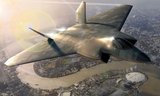
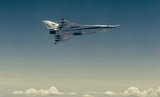
Little detail is known about the AIM-260 but the basic configuration is believed to be unchanged since this 2022 rendering. (Image: US Air Force)
As global air combat operations continue to evolve at a rate not seen for decades, what will the next generation of air-to-air weapons look like, and what missions will they need to fulfil?


Weapons development is guided and accelerated by experience of actual conflict. Sometimes, equipment may prove to be virtually perfect when first used in a hot war, but equally a system may fail to perform as expected or even prove wholly unsuited. A further aspect – currently of great concern – is the cost and production complexity of the weapon; even the best-designed ordnance cannot perform if it is not built or delivered in time.
In the air-to-air sector, current conflicts and threats have identified the need for weapons that encompass two radically different types of engagement at opposite ends of
Our news & analysis is now part of Defence Insight®
A Basic-level or higher Defence Insight subscription is now required to view this content.

You may also like

More from Air Warfare
-
![November crewed air roundup: Europe is rethinking fighter and airlift procurement]()
November crewed air roundup: Europe is rethinking fighter and airlift procurement
November’s crewed air market demonstrated the ways allies are working together to modernise their air forces, showing how future partnerships could take different forms depending on what countries need most.
-
![Pentagon’s bomber UAV trials test how fast industry can respond]()
Pentagon’s bomber UAV trials test how fast industry can respond
Swarm Defense built bomber UAV prototypes in under three weeks for the Pentagon’s Drone Dominance Program in an indication of how quickly manufacturers of uncrewed aircraft have to compete for contracts.
-
![Tekever eyes naval carrier surveillance role for AR5 uncrewed aircraft]()
Tekever eyes naval carrier surveillance role for AR5 uncrewed aircraft
Tekever’s AR5 carrier debut highlights its potential for maritime surveillance as the Royal Navy develops its future hybrid air wing.
-
![Why combat advantage depends on connected mission systems]()
Why combat advantage depends on connected mission systems
How can armed forces connect autonomous platforms and introduce new capabilities faster while maintaining security and airworthiness?
-
![F-16 backbone, Gripen spearhead: Ukraine’s future fighter fleet takes shape]()
F-16 backbone, Gripen spearhead: Ukraine’s future fighter fleet takes shape
Ukraine’s future fighter fleet could combine F-16s, Gripens and potentially Rafales, balancing combat needs against training, logistics and aircraft supply constraints.
-
![Northrop–Hermeus deal underscores push to pair startup speed with defence know-how]()
Northrop–Hermeus deal underscores push to pair startup speed with defence know-how
Northrop Grumman plans mission systems testing following its Hermeus agreement, highlighting how established defence contractors are partnering with newer companies to accelerate development and bring autonomous capabilities to military customers.