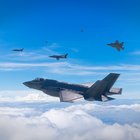
Saab’s recent Gripen E/F contract success with Thailand could open more doors for further procurement from other APAC countries. (Photo: Saab)
Ahead of the Singapore Airshow 2026, opportunities for defence firms to upgrade or replace ageing aircraft remain strong, with tactical transport, combat aircraft and maritime patrol aircraft at the top of potential procurement lists.
Defence spending and procurement across Asian-Pacific (APAC) countries is on the rise, with defence budgets increased and armed forces consolidating and upgrading their aircraft to meet growing operational demands.
With an increasingly fraught evolving security landscape, epitomised by China and its ongoing efforts to strengthen its military – including the modernisation of its air combat capabilities – surrounding countries are sharply focused on improving and expanding their own.
Shephard Defence Insightestimates that the total value of the APAC defence aerospace market is around US$388 billion, with as-yet unawarded or selected programmes accounting for approximately $164 billion.
Our news & analysis is now part of Defence Insight®
A Basic-level or higher Defence Insight subscription is now required to view this content.
Northrop Grumman plans mission systems testing following its Hermeus agreement, highlighting how established defence contractors are partnering with newer companies to accelerate development and bring autonomous capabilities to military customers.
AI-powered sensing technologies are advancing battlefield intelligence capabilities, with companies including Sightline Intelligence and Arkeus developing smaller, more sophisticated systems to help military UAV operators process data and identify threats.
For decades, advanced military propulsion has centred on enabling ever-more capable fighters and bombers – delivering more thrust, more range, greater power, and thermal management, plus longer service lives. Those requirements remain essential. However, the rise of autonomous systems, advanced effectors, and autonomous collaborative platforms is redefining what that propulsion must deliver.
The Czech Republic’s shift towards smaller uncrewed aerial vehicles has reshaped its procurement priorities, leaving nearly three-quarters of the market unawarded. Yet with this value concentrated in just two programmes, the highest-value opportunities could contain a high level of risk.
The RAF’s expanding Protector RG1 fleet could play a growing role in UK maritime surveillance following its first domestic operational sorties, with further aircraft deliveries scheduled through 2027.
Leonardo’s integration of Shield AI’s Hivemind software could enable its Proteus uncrewed helicopter to conduct independent anti-submarine warfare missions, supporting the Royal Navy’s plans for a future hybrid air wing.