Sentient and Shield AI sign agreement to integrate next generation ViDAR onto V-Bat
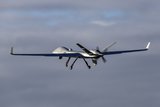
V-Bat has been in service in Brazil and has been evaluated by Canada. (Photo: Shield AI)
A new agreement between Sentient and Shield AI, who have worked together to combine their respective sensor and system, will aim to strengthen the relationship.


Australia’s Sentient Vision and US-based Shield AI will develop a next-generation wide-area motion imagery (WAMI) solution which will see Sentient’s ViDAR system integrated onto the US company’s V-Bat VTOL UAS under an agreement signed on 23 October.
The multi-year, multi-unit agreement will lead to deliveries beginning next year. It follows a previous joint development announcement over the integration of a ViDAR-enabled, wide-area-search capability onto Shield AI’s V-Bat unmanned aircraft, which has enabled Shield AI’s V-Bat to intelligently classify, track and read-and-react to targets in dynamic missions.
According to the companies, the agreement reflected a wider strategic objective within the tri-nation AUKUS agreement, particularly as it relates to the field of AI.
Sentient CEO Mark Palmer said: ‘The confirmation of our long-term relationship absolutely reflects the AI technology workstream that is underlined in the AUKUS Pillar 2. Innovation stemmed from our computer vision AI-enabled ViDAR and Shield AI’s Hivemind will provide commanders with immediate situational awareness and survivability of our warfighters.’
ViDAR, Sentient’s AI system, uses an EO/IR sensor to detect and classify targets in the imagery stream that would be invisible to a human operator or to a conventional radar.
Related Equipment in Defence Insight

More from Air Warfare
-
![India’s military integration drive faces interoperability hurdles]()
India’s military integration drive faces interoperability hurdles
Senior military leaders have highlighted the need for interoperable systems, common data standards and closer cooperation between India's armed services.
-
![UK A400M Saudi deployment highlights airlifter’s role as Airbus pursues upgrades]()
UK A400M Saudi deployment highlights airlifter’s role as Airbus pursues upgrades
Airbus is developing new capabilities for its A400M transport aircraft as European countries consider future airlift requirements and the UK plans to deploy the aircraft to Saudi Arabia.
-
![The new generation of defence companies emerging from the US UAV boom]()
The new generation of defence companies emerging from the US UAV boom
As the Pentagon accelerates procurement of low-cost, lethal UAVs through its Drone Dominance Program, emerging suppliers will need to demonstrate manufacturing capacity, supply chain resilience and reliability.
-
![US Coast Guard faces key procurement decisions after C-130J and MQ-9B orders]()
US Coast Guard faces key procurement decisions after C-130J and MQ-9B orders
The service is updating several parts of its aviation fleet including fixed-wing and rotary-wing aircraft and procuring uncrewed aircraft to boost its maritime surveillance.