S-100 completes USN flight trials
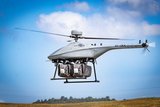
Schiebel Camcopter S-100. (Photo: Schiebel)
ONR-sponsored demonstration showcased Schiebel UAS with lidar data-gathering system.


Schiebel announced on 9 August that it has successfully completed flight trials of its Camcopter S-100 for the USN.
In a combined demonstration sponsored by the Office of Naval Research (ONR) on a commercial vessel off the coast of Florida, Schiebel and Areté Associates demonstrated the capabilities of S-100 installed with the Areté Pushbroom Imaging Lidar for Littoral Surveillance (PILLS) system for data-gathering missions.
PILLS enables hydrographic mapping of ocean littoral spaces with a low SWaP sensor that ‘easily integrates into the S-100’, Schiebel noted in a statement.
The S-100 recently completed a week-long trial with the Hellenic Navy. In total, the system is in service with 14 navies worldwide.
Related Equipment in Defence Insight


More from Air Warfare
-
![V-22 Osprey safety upgrade moves towards wider fleet installation under $35.5 million deal]()
V-22 Osprey safety upgrade moves towards wider fleet installation under $35.5 million deal
Bell Boeing will supply 73 additional ODSSHI kits as NAVAIR prepares to introduce predictive drive-system monitoring across US and Japanese V-22 fleets.
-
![India’s rotary-wing capability gap grows as IMRH programme delays persist]()
India’s rotary-wing capability gap grows as IMRH programme delays persist
With IMRH and DBMRH potentially years from service, India faces a widening rotary-wing capability gap that could drive further foreign purchases even as HAL and Safran build the foundations of an indigenous successor.
-
![AFA 2026: Swarm Aero eyes 2027 Gamera flight as Textron/Merlin reveal SkyCourier UX]()
AFA 2026: Swarm Aero eyes 2027 Gamera flight as Textron/Merlin reveal SkyCourier UX
Two new uncrewed aircraft concepts target very different US military requirements, from massed long-range strike to autonomous logistics. Shephard spoke with executives from Swarm Aero, Textron Aviation and Merlin Labs at this year's AFA Air, Space & Cyber conference to learn more about their capabilities.