Raytheon gains StormBreaker lifecycle support contract modification
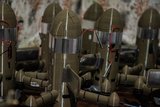
GBU-53/B StormBreaker. (Photo: Raytheon)
StormBreaker already equips F-15E fighter aircraft and the glide bomb is also undergoing developmental and operational testing with the F-35B.


Raytheon Missiles & Defense has received a $75 million increase from the USAF to its IDIQ contract for the GBU-53/B StormBreaker precision-guided glide bomb (also known as the Small Diameter Bomb II).
The total cumulative face value of the Air Force Life Cycle Management Center lifecycle support contract is now $275 million, the DoD noted on 16 May.
Work will be performed in Tucson, Arizona, and is expected to be completed by 30 September 2024.
StormBreaker already equips the F-15E fighter aircraft and the glide bomb is also undergoing developmental and operational testing with the F-35B.
StormBreaker is an advanced air-to-ground, precision smart weapon, which provides users with an all-weather capability from standoff ranges with the ability to see through obscurants like fog, sand and dust.
Related Equipment in Defence Insight

You may also like

More from Air Warfare
-
![Attack drones versus CUAS – the future of warfare or just another trend?]()
Attack drones versus CUAS – the future of warfare or just another trend?
Demand signals for counter-drone technology are strong and the market is becoming crowded, but is this really the beginning of a new phase of warfare or will commentators be talking about something else 10 years from now?
-
![The 2020s: a decade of UAV spending growth]()
The 2020s: a decade of UAV spending growth
Total annual drone spending has increased nearly sixfold since the start of the decade, from $2.9 billion in 2020 to $16.3 billion in 2028, with Europe leading the rise.
-
![USAF opens B-52 upgrade to new companies as major programmes fall behind schedule]()
USAF opens B-52 upgrade to new companies as major programmes fall behind schedule
The US Air Force is seeking additional contractors to support communications upgrades for the B-52, while multiple Stratofortress modernisation programmes continue to experience delays, cost growth and technical challenges.
-
![July drone digest: Sovereign production takes centre stage at Farnborough]()
July drone digest: Sovereign production takes centre stage at Farnborough
Farnborough International Airshow (FIA) 2026 revealed the growing scale of the UK’s uncrewed ambitions, with companies showcasing new CCA, autonomous wingmen and surveillance drones, while sovereign production emerged as a key factor for multiple programmes.