Rafael sells BNET-AR to Asian air force
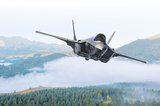
BNET-AR software-defined radio. (Photo: Rafael)
Israeli company finds Asian customer for airborne software-defined radios.


The BNET-AR software-defined communication solution from Rafael Advanced Defense Systems will be installed on a fleet of aircraft belonging to the air force of an unnamed Asian country, the Israeli company announced on 15 June.
BNET-AR is a modular multiband software-defined radio (SDR) for airborne platforms, integrated on fighters and helicopters as well as Ground Control Stations, enabling network-centric operations and real-time situation awareness.
‘This new contract strengthens our position as a major supplier of aerial communication systems,’ claimed Yoav Wermuth, Rafael VP and head of C3I.
While the Israeli company did not divulge the name of the customer, Shephard reported in February 2017 that India was ordering about 1,000 of the SDRs for its Sukhoi Su-30MKI, Jaguar and airborne early warning aircraft fleets.
BNET technology is available in several configurations: BNET Hand Held for soldiers in the field; BNET Vehicular for operation on combat vehicles; and BNET Airborne for aircraft.
The dual-band software-defined radio family provides jam-resistant, high-speed data and voice (analogue and VoIP) for use in combat communications, Shephard Defence Insight notes.
Related Equipment in Defence Insight

You may also like

More from Air Warfare
-
![New US Army UH-60M Black Hawk order bridges uncertain path to MV-75 transition]()
New US Army UH-60M Black Hawk order bridges uncertain path to MV-75 transition
The US$234 million award for 16 Sikorsky UH-60Ms preserves near-term production, but funding uncertainty and an undefinitised contract leave the US Army’s long-term Black Hawk requirements unresolved.
-
![Rafale AI trials highlight shift towards operational fighter testbeds]()
Rafale AI trials highlight shift towards operational fighter testbeds
Dassault’s latest Rafale trials join Gripen E and F-16 testing as developers explore how artificial intelligence could support and control combat aircraft.
-
![V-22 Osprey safety upgrade moves towards wider fleet installation under $35.5 million deal]()
V-22 Osprey safety upgrade moves towards wider fleet installation under $35.5 million deal
Bell Boeing will supply 73 additional ODSSHI kits as NAVAIR prepares to introduce predictive drive-system monitoring across US and Japanese V-22 fleets.
-
![AFA 2026: US Air Force examines uncrewed cargo aircraft for contested logistics]()
AFA 2026: US Air Force examines uncrewed cargo aircraft for contested logistics
The US Air Force is evaluating demonstrators for uncrewed cargo missions as it considers logistics requirements across the Pacific and other contested environments.
-
![Germany air focus: Europe’s leading near-term air market targets domestic industry]()
Germany air focus: Europe’s leading near-term air market targets domestic industry
Between 2026 and 2032, almost a quarter of EU aircraft spending is expected to come from Germany. While crewed programmes seek modernisation and replacement, uncrewed opportunities look to introduce entirely new capabilities, with both highlighting sovereignty and domestic production.
-
![Europe risks losing control of CUAS production capacity as manufacturers look abroad]()
Europe risks losing control of CUAS production capacity as manufacturers look abroad
European counter-drone developers are securing early orders in the Middle East while slow domestic acquisition processes threaten to redirect production capacity, expertise and investment away from Europe.