Quantum Systems, Airbus, and Spleenlab team up to research artificial intelligence from drone swarms
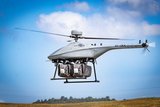
The trio of Quantum Systems, Airbus, and Spleenlab have been awarded a German contract to explore the AI required for swarming drones. (Photo: Quantum Systems)
The German Armed Forces Planning Office has awarded Airbus Defence and Space, Quantum-Systems and Spleenlab a research contract to demonstrate and analyse the AI building blocks required for swarms of tactical UAS.


The KITU 2 project is funded by the German MoD and focused on the effectiveness of tactical UAS.
Airbus Defence and Space will contribute trusted swarming algorithms, simulation environments, experimental hardware, and additional AI building blocks.
Quantum Systems is providing the Vector 2-in-1 tactical aerial reconnaissance platform with built-in AI edge-computing capabilities.
Related Articles
Indian Army receives its first swarm of UAVs
Quantum-Systems’ clientele grows globally as company builds up family of sUAVs.
Thales to supply standby flight instruments for Airbus H160M helicopter
The 2-in-1 platform can be deployed as a fixed-wing eVTOL Vector or as the multi-copter Scorpion UAS.
Spleenlab offers expertise in edge AI software for swarming, which involves object recognition and robust navigation methods.
Quantum-Systems is currently working on a family of systems strategy that will see its platforms enter the market in 2024 and 2025 and offer customers a layered approach in terms of range, flight time and payload capabilities.
Work on KITU 2 will support several programmes, including the Franco-German Main Ground Combat System (MGCS) and Franco-German Spanish-Belgian Future Combat Air System (FCAS).
Studies from the war in Ukraine have shown that multiple smaller and lower-cost UAS might be more effective in delivering aerial reconnaissance on the battlefield.
Related Equipment in Defence Insight



More from Air Warfare
-
![V-22 Osprey safety upgrade moves towards wider fleet installation under $35.5 million deal]()
V-22 Osprey safety upgrade moves towards wider fleet installation under $35.5 million deal
Bell Boeing will supply 73 additional ODSSHI kits as NAVAIR prepares to introduce predictive drive-system monitoring across US and Japanese V-22 fleets.
-
![Germany air focus: Europe’s leading near-term air market targets domestic industry]()
Germany air focus: Europe’s leading near-term air market targets domestic industry
Between 2026 and 2032, almost a quarter of EU aircraft spending is expected to come from Germany. While crewed programmes seek modernisation and replacement, uncrewed opportunities look to introduce entirely new capabilities, with both highlighting sovereignty and domestic production.
-
![Europe risks losing control of CUAS production capacity as manufacturers look abroad]()
Europe risks losing control of CUAS production capacity as manufacturers look abroad
European counter-drone developers are securing early orders in the Middle East while slow domestic acquisition processes threaten to redirect production capacity, expertise and investment away from Europe.
-
![India’s rotary-wing capability gap grows as IMRH programme delays persist]()
India’s rotary-wing capability gap grows as IMRH programme delays persist
With IMRH and DBMRH potentially years from service, India faces a widening rotary-wing capability gap that could drive further foreign purchases even as HAL and Safran build the foundations of an indigenous successor.
-
![AFA 2026: Swarm Aero eyes 2027 Gamera flight as Textron/Merlin reveal SkyCourier UX]()
AFA 2026: Swarm Aero eyes 2027 Gamera flight as Textron/Merlin reveal SkyCourier UX
Two new uncrewed aircraft concepts target very different US military requirements, from massed long-range strike to autonomous logistics. Shephard spoke with executives from Swarm Aero, Textron Aviation and Merlin Labs at this year's AFA Air, Space & Cyber conference to learn more about their capabilities.