QinetiQ wins $14 million contract to supply Vindicator drones to US Navy
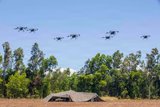
The Vindicator is a basic training target, used to simulate the threat of missiles and aircraft for air defence systems. (Photo: CCC)
The five-year contract is reportedly the largest provision of uncrewed aerial vehicle (UAV) support for use by the US Navy (USN) and will run until late 2029.


QintetiQ has won a contract worth US$14 million from the US Department of Defense (US DoD) to supply its Vindicator drones to the Naval Air Warfare Center Weapons Division (NAWCWD). The UAV will help the USN to test its air defence systems.
According to QintetiQ, the UAV is designed to act as a target that simulates aircraft and missile threats. The five-year contract came into effect in December 2024 and will run until late-2029, with an option for a six-month extension.
Under the contract, personnel from Canada will also be deployed and provide services similar to the Banshee operations, but tailored more to meet the USN’s specific requirements, according to QinetiQ.
“QinetiQ is proud to offer the Vindicator to the [NAWCWD], to help enhance the preparedness and response capabilities of the USN,” said Ryan Peterson, customer account manager, QinetiQ.
The deal was facilitated by the Canadian Commercial Corporation as the prime contractor, alongside Public Services and Procurement Canada. It is reportedly the sixth consecutive agreement awarded to QintetiQ’s Canadian facility, located in Medicine Hat and the largest provision of UAV support for use at US ranges in California and Virginia.
According to QinetiQ, with a 100nm operating range, the UAV is capable of replicating threats for helicopters, UAVs, low-slow-flyers and high divers.
Related Equipment in Defence Insight


More from Air Warfare
-
![USAF eyes sensor and weapon upgrades as MH-139A Grey Wolf achieves IOC]()
USAF eyes sensor and weapon upgrades as MH-139A Grey Wolf achieves IOC
The Grey Wolf has entered operational service nearly three years later than originally planned, while new sustainment contracts indicate that some UH-1Ns could remain supported until 2031.
-
![How geopolitics and new military alliances are disrupting combat aircraft procurement]()
How geopolitics and new military alliances are disrupting combat aircraft procurement
Selection of fighter aircraft by national governments has always been political. As markets and allegiances shift against a background of global realignment, who will be the winners and losers as new entrants compete with established suppliers?
-
![Singapore’s interest in GCAP reflects its long-term approach to air power]()
Singapore’s interest in GCAP reflects its long-term approach to air power
A potential interest in joining GCAP is indicative of Singapore’s long-term and methodical approach to defence procurement and could benefit its local defence industry.
-
![Extending mission readiness: where XR adds real value in pilot, crew and maintenance training]()
Extending mission readiness: where XR adds real value in pilot, crew and maintenance training
Extended reality (XR) is becoming increasingly relevant in military aviation training, adding a flexible layer to an integrated ecosystem spanning the pilot, crew, and maintenance domains.
-
![US military tests AI-powered CUAS turret against drone swarms]()
US military tests AI-powered CUAS turret against drone swarms
As the US continues to invest heavily in counter-drone systems, demand for low-cost, mobile and autonomous technologies is on the rise, with Edda designed to align with these emerging requirements.
-
![August crewed air review: KC-390 momentum builds as demand in the tanker market grows]()
August crewed air review: KC-390 momentum builds as demand in the tanker market grows
The KC-390 is building a growing international operator base, but competition in the transport and tanker market is increasingly likely to depend on interoperability, commonality and the strength of supporting ecosystems. Meanwhile, Boeing’s KC-46 and Airbus’s A330 also gained ground in August.