Northrop Grumman says no to prime role on US Air Force NGAD fighter programme
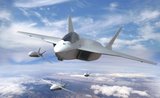
The USAF announced in May that the Department of the Air Force had begun soliciting proposals for the Next-Generation Air Dominance programme. (Photo: Northrop Grumman)
‘We’re not planning to respond to the NGAD request for proposal as the prime,’ Northrop Grumman’s CEO said, revealing the company’s decision to opt out of heading up the USAF’s Next-Generation Air Dominance (NGAD) programme.


Northrop Grumman will not compete as a prime contractor on the USAF’s Next-Generation Air Dominance (NGAD) fighter programme but holds open the possibility to bid for the complementary loyal wingman and separate USN sixth-generation fighter, company CEO Kathy Warden said on 27 July.
‘We have notified the US Air Force that we’re not planning to respond to the NGAD RfP [Request for Proposals] as the prime,’ she said during a Q2 earnings call.
After years of speculation, in May, the USAF announced that the Department of the Air Force had begun soliciting proposals for the programme. It also confirmed that
Our news & analysis is now part of Defence Insight®
A Basic-level or higher Defence Insight subscription is now required to view this content.



More from Air Warfare
-
![Oshkosh and Grid Aero tie-up tests new model for scaling military UAS production]()
Oshkosh and Grid Aero tie-up tests new model for scaling military UAS production
By combining established manufacturing capacity with startup aircraft design, the partnership could offer an alternative approach to scaling military uncrewed aircraft production.
-
![European funding and NATO interoperability could shape Polish helicopter plans]()
European funding and NATO interoperability could shape Polish helicopter plans
Poland is seeking to update its transport helicopters as part of a wider military aviation modernisation programme, with EU funding requirements and NATO interoperability key considerations.
-
![Poland air focus: $8.27 billion UAV market highlights value of long-term supplier relationships]()
Poland air focus: $8.27 billion UAV market highlights value of long-term supplier relationships
Poland’s growing investment in UAVs highlights how recurring procurement contracts and continuous technological development can provide suppliers with sustained opportunities beyond initial acquisitions.
-
![October crewed air review: Israel’s Apache deal bets on crewed aviation in an uncrewed age]()
October crewed air review: Israel’s Apache deal bets on crewed aviation in an uncrewed age
Israel’s $1 billion Apache helicopter order highlights the continued demand for crewed attack aviation, while growing integration with uncrewed systems could shape future modernisation and procurement decisions.