Northrop Grumman and Raytheon complete missile interceptor review
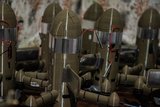
The Northrop Grumman and Raytheon team complete a major milestone to advance the US Next Generation Interceptor program. (Image: Northrop Grumman)
The Missile Defense Agency has approved Northrop Grumman and Raytheon Technologies’ initial review for the Next Generation Interceptor program.


The Northrop Grumman and Raytheon Technologies Next Generation Interceptor (NGI) team has completed its Systems Requirements Review (SRR) for the US Homeland Defense Interceptor program.
The aim of the program is to protect the US against intercontinental ballistic missile threats in the 2030s.
With the review finished, the team moves on to start initial system design, further risk reduction testing and critical component qualification activities.
The Missile Defense Agency approved the SRR after the team demonstrated its NGI Common Software Factory, which enables rapid deployment, integration and delivery in a DevSecOps environment.
Northrop Grumman and Raytheon Technologies are leveraging high-fidelity model-based system engineering and hardware manufacturing in customer-certified facilities.
The team is also conducting internally funded risk reduction hardware development and testing to support the rapid deployment of NGI.
Scott Lehr, VP and general manager, launch and missile defense system, Northrop Grumman, stated: ‘We’re leveraging our two decades on performance on the current Ground-Based Interceptor’.
VP of Strategic Missile Defense, Raytheon Missile & Defense, Tay Fitzgerald outlined the experience Raytheon brings to the team ‘with 47 successful exo-atmospheric intercepts achieved to date’.
The companies initially received the contract to develop the NGI last year, in May 2020.

You may also like

More from Air Warfare
-
![Attack drones versus CUAS – the future of warfare or just another trend?]()
Attack drones versus CUAS – the future of warfare or just another trend?
Demand signals for counter-drone technology are strong and the market is becoming crowded, but is this really the beginning of a new phase of warfare or will commentators be talking about something else 10 years from now?
-
![The 2020s: a decade of UAV spending growth]()
The 2020s: a decade of UAV spending growth
Total annual drone spending has increased nearly sixfold since the start of the decade, from $2.9 billion in 2020 to $16.3 billion in 2028, with Europe leading the rise.
-
![USAF opens B-52 upgrade to new companies as major programmes fall behind schedule]()
USAF opens B-52 upgrade to new companies as major programmes fall behind schedule
The US Air Force is seeking additional contractors to support communications upgrades for the B-52, while multiple Stratofortress modernisation programmes continue to experience delays, cost growth and technical challenges.
-
![July drone digest: Sovereign production takes centre stage at Farnborough]()
July drone digest: Sovereign production takes centre stage at Farnborough
Farnborough International Airshow (FIA) 2026 revealed the growing scale of the UK’s uncrewed ambitions, with companies showcasing new CCA, autonomous wingmen and surveillance drones, while sovereign production emerged as a key factor for multiple programmes.