Industry makes strides on CCA programme as USAF makes nearly $1 billion funding request
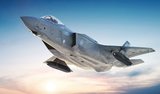
The YFQ-44A during flight tests with the EOU. (Photo: USAF)
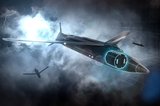
Anduril’s YFQ-44A has successfully undergone USAF experimental testing for Increment 1, while an engine has officially been selected for Northrop Grumman’s YFQ-48A – a potential candidate for Increment 2 of the air force’s CCA programme.


The ongoing work by industry and the United States Air Force (USAF) to develop and test for the Collaborative Combat Aircraft programme has reached further milestones with announcements on operational testing and engine selection from Anduril and Northrop Grumman.
In early April 2026, the USAF Experimental Operations Unit concluded a key exercise at Edwards Air Force Base – one which executed several sorties that tested and refined operational and logistics procedures for sustaining a CCA in contested environments.
The USAF noted that this exercise marked a “vital step toward delivering a combat-effective force multiplier” with the tests representing a shift towards
Our news & analysis is now part of Defence Insight®
A Basic-level or higher Defence Insight subscription is now required to view this content.



More from Air Warfare
-
![South American EW demand balances capability against cost]()
South American EW demand balances capability against cost
South American air forces are weighing advanced electronic warfare capabilities against limited budgets as Peru selects Viper Shield and BAE Systems targets smaller airborne platforms.
-
![September crewed air review: established platforms retain their grip on the market]()
September crewed air review: established platforms retain their grip on the market
With many next-generation capabilities still years from operational readiness, several of the month’s largest developments demonstrated that governments remain willing to invest heavily in aircraft with proven capabilities and established support networks.
-
![Will the US Navy F/A-XX and the USAF F-47 compete for production capacities?]()
Will the US Navy F/A-XX and the USAF F-47 compete for production capacities?
The two sixth-generation fighter programmes could battle for engineering talent and production lines before deliveries begin, testing Boeing’s industrial expansion plans.
-
![E-3 Sentry encryption equipment no longer meets US security requirements, says USAF]()
E-3 Sentry encryption equipment no longer meets US security requirements, says USAF
The US Air Force says the Sentry fleet’s DAR-400 encryptor can no longer keep pace with changing security requirements and warns that a failure could affect US operations and data security.