Lockheed Martin emphasises self-funding efforts for “big bet” next-gen prototypes
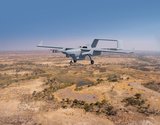
Sikorsky’s autonomous Black Hawk was unveiled in October at AUSA. (Photo: Sikorsky)
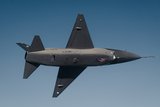
A significant effort is now being made to focus on showcasing prototypes directly to demonstrate various capabilities to the US government.


Lockheed Martin has emphasised an adjustment to how the company spends internal research and development (R&D) funds towards “big-bet, home run” projects.
Speaking during the company’s Q3 earnings call, president and CEO Jim Taiclet said that Lockheed Martin’s approach to R&D allocation has shifted slowly over the last five years towards a focus on developing self-funded prototypes.
Once divided between business units for their own important programmes, an increasing level of the funding now goes towards what Taiclet termed as “real highlight corporate-level R&D programmes”.
The company hit a record quarter with a US$179 billion backlog and strong global demand for
Already have an account? Log in
Want to keep reading this article?


More from Air Warfare
-
![Switzerland faces procurement shake-up with reduced F-35 buy and five-year Patriot delays]()
Switzerland faces procurement shake-up with reduced F-35 buy and five-year Patriot delays
The reduction in the number of planned F-35A aircraft from 36 to 30 by the Swiss government comes due to budget constraints, with no firm plans to fill the gap despite “negative consequences”.
-
![What will the replacement of A-10s by F-35s mean for the US Air Force?]()
What will the replacement of A-10s by F-35s mean for the US Air Force?
The USAF plans to phase out its 162 in-operation A-10 Thunderbolt II Warthogs by the end of FY2026, replacing them with F-35As which will bring a leap in capabilities in terms of lethality, survivability and speed.
-
![Embraer turns to AI solution for A-29 Super Tucano CUAS evolution]()
Embraer turns to AI solution for A-29 Super Tucano CUAS evolution
The AI solution is called Gunslinger, which will be used to assist the pilot in decision-making for counter-drone operations.
-
![European Defence Agency picks Airbus Helicopters’ Capa-X for M2UAS project]()
European Defence Agency picks Airbus Helicopters’ Capa-X for M2UAS project
The multi-mission uncrewed platform project is aiming to help the EU agency define new drone designs that are capable of performing a wide range of mission sets with one adaptable airframe.
-
![Anduril marks new milestones with YFQ-44A flight tests as USAF plans further demos]()
Anduril marks new milestones with YFQ-44A flight tests as USAF plans further demos
A production decision on Increment 1 of the CCA Programme is due to be made by the end of the year, with further demonstrations building on F-22 Raptor and MQ-20 Avenger teaming flight tests.
-
![First confirmed US one‑way drone strike on Iran sharpens Pentagon UAV expansion]()
First confirmed US one‑way drone strike on Iran sharpens Pentagon UAV expansion
The US is currently escalating its efforts to acquire more than 300,000 low-cost one-way attack drones, with the confirmed use of these platforms against Iran in recent days emphasising their growing use in combat.