Brazilian Air Force conducts first live fire of Meteor missile from Gripen E
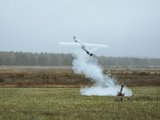
The BVR-X exercise took place with support from Saab, MBDA and several FAB units. (Photo: Saab)
The major milestone for the beyond-visual-range air-to-air missile was conducted in November and expands the capabilities of the air force’s growing Gripen E fleet.


The Brazilian Air Force (FAB) has successfully demonstrated that it can fire MBDA’s Meteor beyond-visual-range (BVR) missile from its Saab JAS39 Gripen E aircraft, with the conclusion of successful firings last month.
The firing tests from the Gripen E form a crucial milestone in expanding the FAB’s Gripen E capabilities. Four Gripen E fighters took part in the exercise, with the two missiles successfully hitting two Mirach 100/5 drone targets.
According to the FAB, these latest firing demonstrations consolidated the maturity of the Gripen and Meteor pairing, making Brazil the newest entrant – alongside France, Germany, the UK and Sweden
Our news & analysis is now part of Defence Insight®
A Basic-level or higher Defence Insight subscription is now required to view this content.



More from Air Warfare
-
![Oshkosh and Grid Aero tie-up tests new model for scaling military UAS production]()
Oshkosh and Grid Aero tie-up tests new model for scaling military UAS production
By combining established manufacturing capacity with startup aircraft design, the partnership could offer an alternative approach to scaling military uncrewed aircraft production.
-
![European funding and NATO interoperability could shape Polish helicopter plans]()
European funding and NATO interoperability could shape Polish helicopter plans
Poland is seeking to update its transport helicopters as part of a wider military aviation modernisation programme, with EU funding requirements and NATO interoperability key considerations.
-
![Poland air focus: $8.27 billion UAV market highlights value of long-term supplier relationships]()
Poland air focus: $8.27 billion UAV market highlights value of long-term supplier relationships
Poland’s growing investment in UAVs highlights how recurring procurement contracts and continuous technological development can provide suppliers with sustained opportunities beyond initial acquisitions.
-
![October crewed air review: Israel’s Apache deal bets on crewed aviation in an uncrewed age]()
October crewed air review: Israel’s Apache deal bets on crewed aviation in an uncrewed age
Israel’s $1 billion Apache helicopter order highlights the continued demand for crewed attack aviation, while growing integration with uncrewed systems could shape future modernisation and procurement decisions.