Lockheed Martin conducts first flight of U-2 Avionics Tech Refresh programme
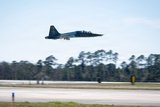
The first flight of the U-2 ATR has taken place, (Photo: Lockheed Martin)
Lockheed Martin’s Skunk Works has successfully completed the first flight of the U-2 reconnaissance aircraft Avionics Tech Refresh (ATR) programme, an effort to upgrade the type’s capabilities for the future battlespace.


A key feature of ATR is an updated avionics suite – including communications, navigation and displays – that modernises the U-2’s onboard systems to readily accept and use new technology.
Additionally, it includes new modern cockpit displays to make pilot tasks easier, while enhancing presentation of the data the aircraft collects to enable faster, better-informed decisions.
During the test the aircraft successfully performed a low-altitude functional check flight to integrate new avionics, cabling and software.
Related Articles
Collins Aerospace & Lockheed Martin complete U-2 Dragon Lady sensor upgrades
U-2 Dragon Lady shows plenty of life
The ATR first flight marks a milestone in the U-2’s modernisation efforts and further testing will solidify a mature software baseline before mission systems are introduced to ensure both functionality and interoperability to meet operational needs.
Lockheed Martin U-2 ATR programme manager Sean Thatcher said: ‘The successful first flight of the U-2 ATR is a significant moment in our journey to rapidly and affordably field new capabilities.’
‘Leveraging the platform’s open architecture, we’re expediting these capabilities needed for the future Joint All-Domain Operations battlespace.’
The U-2 ATR contract was awarded by the USAF in 2020 and is valued at $50 million.
Related Equipment in Defence Insight

More from Air Warfare
-
![July drone digest: Sovereign production takes centre stage at Farnborough]()
July drone digest: Sovereign production takes centre stage at Farnborough
Farnborough International Airshow (FIA) 2026 revealed the growing scale of the UK’s uncrewed ambitions, with companies showcasing new CCA, autonomous wingmen and surveillance drones, while sovereign production emerged as a key factor for multiple programmes.
-
![FIA 2026: Bell highlights MOSA-driven growth path for MV-75 Cheyenne]()
FIA 2026: Bell highlights MOSA-driven growth path for MV-75 Cheyenne
Bell Flight’s modular open-systems approach for the US Army’s MV-75 Cheyenne could open doors for international allies and suppliers once locked out by closed rotorcraft architectures.
-
![Maximise survivability with advanced electronic warfare (video)]()
Maximise survivability with advanced electronic warfare (video)
BAE Systems’ all-digital EW delivers 360-degree threat awareness in contested environments, boosts survivability, and cuts lifecycle costs.
-
![US Air Force seeks avionics upgrades for ageing T-38 Talon as T-7A Red Hawk delays persist]()
US Air Force seeks avionics upgrades for ageing T-38 Talon as T-7A Red Hawk delays persist
The USAF is looking for commercial avionics solutions to improve the T-38 Talon’s reliability, readiness and flight safety as continued T-7A Red Hawk delays increase the likelihood that the legacy trainer will remain in service longer than planned.
-
![British Army’s Project Corvus selection highlights new era of drone sovereignty]()
British Army’s Project Corvus selection highlights new era of drone sovereignty
The UK’s choice of the Tekever AR5 for Project Corvus reflects a wider shift in military drone procurement towards solutions that centre on sovereignty and domestic production, moving away from overseas reliance.