ITPS Canada selects Avioniq simulation technology for training
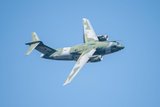
ITPS operates L-39 Albatrosses as part of its wider fleet of training aircraft. (Photo: ITPS)
With Avioniq’s AqLab and AqModel, students will be able to train using models of currently deployed missile types.


International Test Pilots School Canada (ITPS) has announced that it has selected software developer Avioniq’s technology to equip its military training aircraft. Delivery of the software is expected by January 2025, with entry into service beginning later in 2025.
The integration of Avioniq’s AqLab and AqModel will reportedly allow ITPS’ students to train using models of currently deployed missile types. According to Avioniq, this will allow them to understand in-flight missile performance, enhancing their decision making, survivability and lethality in combat operations.
Furthermore, AqModels can replicate the performance of missile platforms, as visualised by AqLab’s visualisation tool. This includes air-to-ground, air-to-air, ground-to-air, cruise and hypersonic missiles, as well as guided bombs and loitering munitions, according to Avioniq.
Related Articles
ITPS wins RCAF contract and teams with KAI
Mikael Grev, founder and CEO of Avioniq, said: “With the addition of AqLab and AqModel to their training toolkit, ITPS Canada will be able to easily and quickly replicate real world threats for the purposes of preparing their trainees for the challenges they will face in combat.”
ITPS has a mixed fleet of 30 aircraft, which includes jet trainers – most notably the L-39 Albatross - transonic fighters and single-engine aircraft. Training simulators are also heavily incorporated into its training programmes.



More from Air Warfare
-
![With a wave of upgrades, the MQ-9B is ready for high-tech warfare]()
With a wave of upgrades, the MQ-9B is ready for high-tech warfare
The modern battlefield is evolving rapidly — threats range from stealthy cruise missiles to coordinated drone swarms. General Atomics Aeronautical Systems, Inc. (GA-ASI) is meeting these challenges head-on with a series of transformative upgrades to its MQ-9B SkyGuardian® and maritime SeaGuardian® remotely piloted aircraft.
-
![UK Defence Investment Plan: What does it mean for UK air power?]()
UK Defence Investment Plan: What does it mean for UK air power?
The DIP sees £8.6 billion earmarked for the Global Combat Air Programme, with heavy emphasis on uncrewed systems procurement and a national CCA programme, despite pushed forward helicopter retirements and questions over what shape future ISR capabilities could take.
-
![US Air Force seeks additional suppliers of bunker bomb warheads]()
US Air Force seeks additional suppliers of bunker bomb warheads
The USAF plans to award up to four contracts to expand production of large penetrator warhead case assemblies supporting the GBU-57 Massive Ordnance Penetrator and future GBU-76 Next-Generation Penetrator.
-
![June drone digest: Landmark CCA contract and deep-strike capability flourishes at Eurosatory]()
June drone digest: Landmark CCA contract and deep-strike capability flourishes at Eurosatory
June 2026 saw the landmark acquisition of the first fighter-type Collaborative Combat Aircraft (CCA), while the month also hosted Eurosatory, which showcased deep-strike capabilities and production deals with the civilian industry.