Indonesia and Pakistan pursue similar strategies with Chinese UCAVs
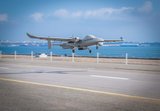
Indonesia’s MoD announced that the air force’s CH-4s had been granted military airworthiness certification. (Photo: TNI-AU)
The Chinese-built CH-4B features strongly in both Indonesian and Pakistani unmanned air combat capabilities.


Indonesia and Pakistan epitomise national efforts to develop and field UAVs, but with the realisation that foreign technology is a necessary precursor to that. On 25 August, for example, First Adm Teguh Sugiono, head of Indonesia’s MoD Feasibility Centre, issued a certificate of military airworthiness for the CH-4B UAV in Jakarta.
Sugiono delivered it to a representative of Aerospace Long March International Trade Co Ltd, the exporter of the MALE UCAV. The certification followed a series of document verifications, conformity inspections and static and dynamic testing by the Indonesian Military Airworthiness Authority.
The Indonesian Air Force (TNI-AU) has six examples
Our news & analysis is now part of Defence Insight®
A Basic-level or higher Defence Insight subscription is now required to view this content.


More from Air Warfare
-
![July air forces review: Farnborough steals the headlines as programmes develop]()
July air forces review: Farnborough steals the headlines as programmes develop
The biannual Farnborough International Airshow 2026 was the backdrop in July for scores of deals, partnerships and announcements, including developments in the multinational next-generation Global Combat Air Programme and the UK’s $486 million trainer aircraft requirement.
-
![Maximise survivability with advanced electronic warfare (video)]()
Maximise survivability with advanced electronic warfare (video)
BAE Systems’ all-digital EW delivers 360-degree threat awareness in contested environments, boosts survivability, and cuts lifecycle costs.
-
![US Air Force seeks avionics upgrades for ageing T-38 Talon as T-7A Red Hawk delays persist]()
US Air Force seeks avionics upgrades for ageing T-38 Talon as T-7A Red Hawk delays persist
The USAF is looking for commercial avionics solutions to improve the T-38 Talon’s reliability, readiness and flight safety as continued T-7A Red Hawk delays increase the likelihood that the legacy trainer will remain in service longer than planned.
-
![British Army’s Project Corvus selection highlights new era of drone sovereignty]()
British Army’s Project Corvus selection highlights new era of drone sovereignty
The UK’s choice of the Tekever AR5 for Project Corvus reflects a wider shift in military drone procurement towards solutions that centre on sovereignty and domestic production, moving away from overseas reliance.