India’s UCAV makes moves on the ground
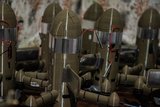
A conceptual scale model of the SWiFT UCAV, as displayed by the DRDO several years ago. (Gordon Arthur)
India’s march towards a stealthy UCAV continues, with a taxi test of a technology demonstrator occurring recently.


The SWiFT (Stealth Wing Flying Testbed), a scaled-down 1t technology demonstrator for India’s Ghatak UCAV, recently completed low-speed taxi trials at the Aeronautical Test Range in Karnataka for the Indian Air Force.
Powered by an NPO Saturn 36MT turbofan, the demonstrator could be flown in the next few months.
The SWiFT may have satisfied some cynics about the Ghatak’s viability. However, many experts question whether the Ghatak will fly as promised around 2024-25, before the Advanced Medium Combat Aircraft (AMCA) takes flight in 2026. The two share stealth technologies.
The Defence Research & Development Organisation (DRDO) is also likely
Our news & analysis is now part of Defence Insight®
A Basic-level or higher Defence Insight subscription is now required to view this content.

More from Air Warfare
-
![Canada targets 2028 operational debut for AIM-9X and AIM-120D missiles]()
Canada targets 2028 operational debut for AIM-9X and AIM-120D missiles
The missile programmes form part of a broader effort to strengthen Canadian air-combat readiness as the RCAF transitions from the CF-188 to the F-35A and rebuilds its operational weapons stocks.
-
![AIM-260 JATM deal puts Australia’s missile-industrial ambitions in focus]()
AIM-260 JATM deal puts Australia’s missile-industrial ambitions in focus
While a potentially accelerated acquisition timeline could strengthen the RAAF’s long-range air combat capability, Canberra’s continued reliance on US missile production is also put under the spotlight in parallel to its push to build a sovereign industry.
-
![Attack drones versus CUAS – the future of warfare or just another trend?]()
Attack drones versus CUAS – the future of warfare or just another trend?
Demand signals for counter-drone technology are strong and the market is becoming crowded, but is this really the beginning of a new phase of warfare or will commentators be talking about something else 10 years from now?