How Russia’s declining arms sales is reshaping the global defence industry
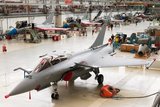
Serbia has reportedly been close to signing a €3 billion deal with France’s Dassault Aviation for up to 12 Rafale fighter jets. (Photo: French Air Force on X)
As Serbia considers a multi-billion-euro deal for French Rafale fighter jets, its move towards Western arms has signalled a significant departure from its reliance on Russian equipment, reflecting broader shifts in global defence procurement.


Russia’s international arms sales halved between 2019 and 2023. With war raging in Ukraine and sanctions hitting Moscow hard, the country fell behind France for the first time becoming the world’s third-largest arms exporter, according to Stockholm International Peace Research Institute (SIPRI).
As Russia’s influence wanes – the country exported major arms to 31 states in 2019 but only exported to 12 in 2023 – countries such as India are focusing more on their own military strengths and teaming up with old rivals. Age-old alley Serbia, meanwhile, has been increasingly turning to the West for military gear, marking change driven by practical needs and global politics. The trend will likely continue
Our news & analysis is now part of Defence Insight®
A Basic-level or higher Defence Insight subscription is now required to view this content.

More from Air Warfare
-
![Singapore’s interest in GCAP reflects its long-term approach to air power]()
Singapore’s interest in GCAP reflects its long-term approach to air power
A potential interest in joining GCAP is indicative of Singapore’s long-term and methodical approach to defence procurement and could benefit its local defence industry.
-
![Extending mission readiness: where XR adds real value in pilot, crew and maintenance training]()
Extending mission readiness: where XR adds real value in pilot, crew and maintenance training
Extended reality (XR) is becoming increasingly relevant in military aviation training, adding a flexible layer to an integrated ecosystem spanning the pilot, crew, and maintenance domains.
-
![US military tests AI-powered CUAS turret against drone swarms]()
US military tests AI-powered CUAS turret against drone swarms
As the US continues to invest heavily in counter-drone systems, demand for low-cost, mobile and autonomous technologies is on the rise, with Edda designed to align with these emerging requirements.
-
![August crewed air review: KC-390 momentum builds as demand in the tanker market grows]()
August crewed air review: KC-390 momentum builds as demand in the tanker market grows
The KC-390 is building a growing international operator base, but competition in the transport and tanker market is increasingly likely to depend on interoperability, commonality and the strength of supporting ecosystems. Meanwhile, Boeing’s KC-46 and Airbus’s A330 also gained ground in August.