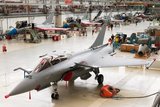
Airbus Helicopters sees defence portfolio’s “strong momentum” continue into 2026
The aerospace company’s 2025 performance figures revealed significant orders from various European armed forces and a boost in demand for its uncrewed offerings.
Germany will sign a multi-billion dollar deal this year for the Arrow Weapon System. (Photo: IMDO)
The $3.5 billion deal needed the green light from Washington as the system includes substantial US technology and DoD and commercial involvement as well as dollars. Details on the approval were provided by head of the Israeli Missile Defence Organisation Moshe Patel.
In a statement, Israel’s MoD said the project will start with the signing of a Letter of Commitment (LoC) between the two countries and will release an initial $600 million. This will be followed by the two countries and industrial lead Israel Aerospace Industries signing the full contract by the end of 2023.
The system will use the latest Arrow-3
Already have an account? Log in
The aerospace company’s 2025 performance figures revealed significant orders from various European armed forces and a boost in demand for its uncrewed offerings.
The first month of 2026 has seen activity in the MALE, rotary-wing, and loitering munition UAV markets, with significant investments and commitments from Germany, Turkey, the UAE and the US. At the same time, questions over loitering munition performance in Ukraine highlight the growing scrutiny alongside rising demand.
While an estimated $37.99bn is still to be awarded across the Asia-Pacific uncrewed aerial vehicle market, the balance of potential future spending is unevenly split between various countries, with significant opportunities to be found in the collaborative combat aircraft space.
Known as Project Nyx, the loyal wingman developed from this initiative will accompany the Apache 64-E and be used to complement tanks and artillery.
The contract deal will enable the production and integration of the Eurofighter Typhoon’s new Eurofighter Common Radar System Mk 2 on part of the UK Royal Air Force’s fleet.
The success of the Bayraktar TB2 stems from it fulfilling a niche of providing reasonable capabilities at a low cost, leading to its acquisition by more than 30 countries including many in Africa; but there are reasons to be cautious about its potential future prospects.