Embraer turns to AI solution for A-29 Super Tucano CUAS evolution
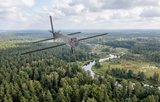
A visual representation of the Valkyrie Gunslinger suite on A-29 Super Tucano. (Photo: Embraer)
The AI solution is called Gunslinger, which will be used to assist the pilot in decision-making for counter-drone operations.


Embraer has moved one step further to expanding out its A-29 Super Tucano’s counter-uncrewed aerial system (CUAS) abilities with a partnership with US-based company, Valkyrie Aero.
The Valkyrie Gunslinger AI suite will be installed onto the A-29 Super Tucano to enable real-time, enhanced CUAS tactical decision-making on the battlefield, both companies said. While the Super Tucano already has a range of sensors, the Valkyrie Gunslinger will be used to “further enhance the A-29 CUAS mission capabilities”, according to Embraer.
“Gunslinger is born from the immediate needs of the frontline warfighter, whom Valkyrie trains and engages with every day,” said
Our news & analysis is now part of Defence Insight®
A Basic-level or higher Defence Insight subscription is now required to view this content.


More from Air Warfare
-
![Connecting the layers: how networks can secure the future of European air defence]()
Connecting the layers: how networks can secure the future of European air defence
The rise of drones has reshaped the threat landscape for all European militaries. For industry, future defensive strategies must carefully balance a mix of passive and active measures to address the evolving danger, based around a highly integrated and responsive network of sensors and effectors.
-
![October drone digest: France and Lithuania advance loitering munition procurements as global spending surges]()
October drone digest: France and Lithuania advance loitering munition procurements as global spending surges
Recent procurement developments in France and Lithuania highlight the growing demand for loitering munitions, with global annual spending forecast to increase nearly 50-fold between 2020 and 2029.
-
![Quantum Systems details 480km/h Ukrainian interceptor as production scales up]()
Quantum Systems details 480km/h Ukrainian interceptor as production scales up
Quantum Systems’s Ukraine-made interceptor SPYS is thought to cost approximately 10 times less than Russia's jet-powered uncrewed aerial systems and is being produced at scale.
-
![UK eyes lightweight satellite communications for UAVs]()
UK eyes lightweight satellite communications for UAVs
The UK is seeking to extend the operational reach of uncrewed aerial vehicles, reflecting growing demand for compact, energy-efficient technology to support beyond-line-of-sight operations.