General Atomics sole awardee for second phase of DARPA’s LongShot UAV project
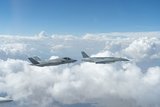
GA-ASI is working on its proposal for Phase 3 of the LongShot programme, which will see prototype manufacturing. (Photo: GA-ASI)
Under LongShot, DARPA aims to increase the standoff range at which fighters can launch air-to-air weapons with an air-released UAV.


The US Defence Advanced Research Projects Agency (DARPA) has selected General Atomics Aeronautical Systems, Inc (GA-ASI) to continue supporting the LongShot programme, which aims to develop an air-launched UAV which is, in turn, capable of firing air-to-air weapons.
Lockheed Martin and Northrop Grumman also received contracts to work on LongShot under Phase 1 of the programme in early 2021.
On 6 March, DARPA confirmed to Shephard that GA-ASI was the only awardee for the second phase of the programme.
After a successful preliminary design review (PDR) last February, GA-ASI was selected to continue into Phase 2 of the project to
Our news & analysis is now part of Defence Insight®
A Basic-level or higher Defence Insight subscription is now required to view this content.


More from Air Warfare
-
![India’s military integration drive faces interoperability hurdles]()
India’s military integration drive faces interoperability hurdles
Senior military leaders have highlighted the need for interoperable systems, common data standards and closer cooperation between India's armed services.
-
![UK A400M Saudi deployment highlights airlifter’s role as Airbus pursues upgrades]()
UK A400M Saudi deployment highlights airlifter’s role as Airbus pursues upgrades
Airbus is developing new capabilities for its A400M transport aircraft as European countries consider future airlift requirements and the UK plans to deploy the aircraft to Saudi Arabia.
-
![The new generation of defence companies emerging from the US UAV boom]()
The new generation of defence companies emerging from the US UAV boom
As the Pentagon accelerates procurement of low-cost, lethal UAVs through its Drone Dominance Program, emerging suppliers will need to demonstrate manufacturing capacity, supply chain resilience and reliability.
-
![US Coast Guard faces key procurement decisions after C-130J and MQ-9B orders]()
US Coast Guard faces key procurement decisions after C-130J and MQ-9B orders
The service is updating several parts of its aviation fleet including fixed-wing and rotary-wing aircraft and procuring uncrewed aircraft to boost its maritime surveillance.