General Atomics Mojave performs live fire tests amid push for FARA replacement
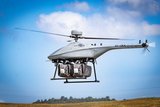
GA-ASI has set its eyes on the gap the cancellation of the Future Attack Reconnaissance Aircraft (FARA) programme left. (Photo: GA-ASI)
During the test the Mojave showcased its capability to act as a sensor, shooter and sustainer, potentially strengthening General Atomics’ pitch towards a FARA replacement.


General Atomics Aeronautical Systems Inc (GA-ASI) has conducted a live-fire test of its Mojave UAS under a project with Dillion Aero.
During the tests, which took place on 13 April, two Dillion DAP-6 gun pod systems were fitted onto the Mojave. The UAS performed seven passes across two flights, firing around 10,000 rounds of ammunition towards various targets.
“Mojave has the ability to act as a sensor, shooter and sustainer, while mitigating threat environments and vulnerabilities, and safeguarding human lives,” said David Alexander, president of GA-ASI.
The Mojave technical demonstrator and GA-ASI’s upgraded Grey Eagle 25M shared key systems and components, which
Our news & analysis is now part of Defence Insight®
A Basic-level or higher Defence Insight subscription is now required to view this content.



More from Air Warfare
-
![V-22 Osprey safety upgrade moves towards wider fleet installation under $35.5 million deal]()
V-22 Osprey safety upgrade moves towards wider fleet installation under $35.5 million deal
Bell Boeing will supply 73 additional ODSSHI kits as NAVAIR prepares to introduce predictive drive-system monitoring across US and Japanese V-22 fleets.
-
![AFA 2026: US Air Force examines uncrewed cargo aircraft for contested logistics]()
AFA 2026: US Air Force examines uncrewed cargo aircraft for contested logistics
The US Air Force is evaluating demonstrators for uncrewed cargo missions as it considers logistics requirements across the Pacific and other contested environments.
-
![Germany air focus: Europe’s leading near-term air market targets domestic industry]()
Germany air focus: Europe’s leading near-term air market targets domestic industry
Between 2026 and 2032, almost a quarter of EU aircraft spending is expected to come from Germany. While crewed programmes seek modernisation and replacement, uncrewed opportunities look to introduce entirely new capabilities, with both highlighting sovereignty and domestic production.
-
![Europe risks losing control of CUAS production capacity as manufacturers look abroad]()
Europe risks losing control of CUAS production capacity as manufacturers look abroad
European counter-drone developers are securing early orders in the Middle East while slow domestic acquisition processes threaten to redirect production capacity, expertise and investment away from Europe.