General Atomics claims fully autonomous AI-piloted flight with Avenger MQ-20A
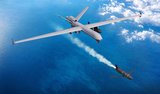
Avenger MQ-20A, formerly known as Predator C. (Photo: USN)
General Atomics claims that the latest Avenger MQ-20A test flight demonstrated capabilities in the race to operationalise autonomy for collaborative combat aircraft.


A company-owned Avenger MQ-20A UAS was used on 12 September by General Atomics Aeronautical Systems to fly a military aircraft with an AI pilot and operationally relevant mission systems software.
The company revealed on 19 September that the ‘completely autonomous flight’ with the AI pilot lasted for about 30 minutes as part of a ‘cooperating live, virtual, and constructive UAS swarm’.
General Atomics employed its Reinforcement Learning (RL) architecture to develop and validate an RL agent in an operationally relevant environment — specifically, enabling ‘chase and avoid’ behaviour in which real-time updates were made to the flight path in order to avoid adversaries using live fused tracks.
The live tracks were provided to the system using a TacIRST embeddable infrared search and track sensor system supplied by Lockheed Martin.
General Dynamics Mission Systems supplied the mission computer for the flight, which is part of a series by General Atomics to demonstrate AI and machine learning concepts for advanced UAS.
Related Equipment in Defence Insight



More from Air Warfare
-
![Saab’s GlobalEye gains ground as Canada’s aircraft procurement tilts towards Europe]()
Saab’s GlobalEye gains ground as Canada’s aircraft procurement tilts towards Europe
Canada’s interest in negotiating a procurement of Saab’s GlobalEye airborne early warning and control aircraft signals its readiness to reduce its reliance on US defence technology as trade tensions with its North American neighbour mount.
-
![South American EW demand balances capability against cost]()
South American EW demand balances capability against cost
South American air forces are weighing advanced electronic warfare capabilities against limited budgets as Peru selects Viper Shield and BAE Systems targets smaller airborne platforms.
-
![September crewed air review: established platforms retain their grip on the market]()
September crewed air review: established platforms retain their grip on the market
With many next-generation capabilities still years from operational readiness, several of the month’s largest developments demonstrated that governments remain willing to invest heavily in aircraft with proven capabilities and established support networks.
-
![Will the US Navy F/A-XX and the USAF F-47 compete for production capacities?]()
Will the US Navy F/A-XX and the USAF F-47 compete for production capacities?
The two sixth-generation fighter programmes could battle for engineering talent and production lines before deliveries begin, testing Boeing’s industrial expansion plans.