GA-ASI takes step towards developing European YFQ-42A Collaborative Combat Aircraft
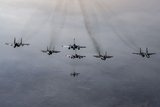
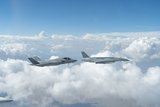
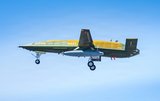
The YFQ-42A prototype CCA is being adapted for European requirements. (Photo: GA-ASI)
The US company will work with its European affiliate company, General Atomics Aerotec Systems (GA-ATS) to support manufacture the YFQ-42A.


General Atomics Aeronautical Systems (GA-ASI) has announced plans to develop a European Collaborative Combat Aircraft (CCA), based on its YFQ-42A prototype.
Announced at the Royal International Air Tattoo (RIAT), GA-ASI’s CCA European mission system customisation and manufacturing will be supported by its German aerospace affiliate, GA-ATS, headquartered in Munich.
GA-ATS already builds and sustains various aircraft and rotorcraft for European militaries, including the NH90 for the German military and the Do-228 multirole aircraft.
According to GA-ASI, leveraging both aerospace companies will provide a “jump start” for European uncrewed fighter development, giving a path to meet the acquisition timelines set by
Our news & analysis is now part of Defence Insight®
A Basic-level or higher Defence Insight subscription is now required to view this content.

More from Air Warfare
-
![India’s military integration drive faces interoperability hurdles]()
India’s military integration drive faces interoperability hurdles
Senior military leaders have highlighted the need for interoperable systems, common data standards and closer cooperation between India's armed services.
-
![UK A400M Saudi deployment highlights airlifter’s role as Airbus pursues upgrades]()
UK A400M Saudi deployment highlights airlifter’s role as Airbus pursues upgrades
Airbus is developing new capabilities for its A400M transport aircraft as European countries consider future airlift requirements and the UK plans to deploy the aircraft to Saudi Arabia.
-
![The new generation of defence companies emerging from the US UAV boom]()
The new generation of defence companies emerging from the US UAV boom
As the Pentagon accelerates procurement of low-cost, lethal UAVs through its Drone Dominance Program, emerging suppliers will need to demonstrate manufacturing capacity, supply chain resilience and reliability.
-
![US Coast Guard faces key procurement decisions after C-130J and MQ-9B orders]()
US Coast Guard faces key procurement decisions after C-130J and MQ-9B orders
The service is updating several parts of its aviation fleet including fixed-wing and rotary-wing aircraft and procuring uncrewed aircraft to boost its maritime surveillance.