


Tekever eyes naval carrier surveillance role for AR5 uncrewed aircraft
Tekever’s AR5 carrier debut highlights its potential for maritime surveillance as the Royal Navy develops its future hybrid air wing.


A CN235 at Gao, Mali, deployed in support of Operation Barkhane. (Photo: author)
France’s directorate for air maintenance (DMAe) has opened an RfP for the support of the French Air Force fleet of CASA CN235 tactical transports. Sabena Technics is currently managing the contract which covers specific support.
The in-service fleet comprises 19 CN235-200s ordered in 1991 (one was lost in an accident in 2003) and eight CN235-300s ordered in 2010 (after the first A400M programme delays). Fifteen are based overseas, with the remainder at Evreux in Normandy.
Three are used in Niger and Mali as medevac (two) and light transport (one) aircraft in support of Operation Barkhane, five in the Pacific (spread between
Our news & analysis is now part of Defence Insight®
A Basic-level or higher Defence Insight subscription is now required to view this content.

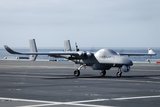
Tekever’s AR5 carrier debut highlights its potential for maritime surveillance as the Royal Navy develops its future hybrid air wing.
How can armed forces connect autonomous platforms and introduce new capabilities faster while maintaining security and airworthiness?
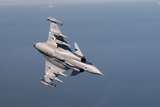
Ukraine’s future fighter fleet could combine F-16s, Gripens and potentially Rafales, balancing combat needs against training, logistics and aircraft supply constraints.
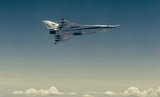
Northrop Grumman plans mission systems testing following its Hermeus agreement, highlighting how established defence contractors are partnering with newer companies to accelerate development and bring autonomous capabilities to military customers.
AI-powered sensing technologies are advancing battlefield intelligence capabilities, with companies including Sightline Intelligence and Arkeus developing smaller, more sophisticated systems to help military UAV operators process data and identify threats.
For decades, advanced military propulsion has centred on enabling ever-more capable fighters and bombers – delivering more thrust, more range, greater power, and thermal management, plus longer service lives. Those requirements remain essential. However, the rise of autonomous systems, advanced effectors, and autonomous collaborative platforms is redefining what that propulsion must deliver.

Connect with us on socials


