Eurosatory 2026: France presses ahead with A400M ISR fleet upgrades
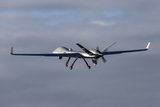
Airbus’ A400M is undergoing upgrades to increase its payload capacity. (Photo: Airbus Defence and Space)
Airbus Defence and Space and OCCAR (Organisation for Joint Armament Cooperation) signed a contract at Eurosatory to develop new capabilities for the French Air Force’s A400M aircraft.


France is pressing ahead with efforts to equip its A400M fleet with intelligence, surveillance and reconnaissance (ISR) capabilities with “Parallel Mission System” (PMS) upgrades.
A contract was signed this week at Eurosatory in Paris between Airbus and Organisation for Joint Armament Cooperation (OCCAR) on behalf of the French Directorate General of Armaments (DGA). The developments, according to Airbus, will focus on the “integration of a new mission system on board” the A400M which is designed to integrate new sensors and communications systems.
The new mission system is also designed, according to Airbus, to manage drones and missiles launched from the cargo hold,
Our news & analysis is now part of Defence Insight®
A Basic-level or higher Defence Insight subscription is now required to view this content.


More from Country-focused updates
-
![Canada accelerates uncrewed aerial system procurement for NATO and Arctic forces]()
Canada accelerates uncrewed aerial system procurement for NATO and Arctic forces
Canada plans to acquire at least 120 uncrewed aerial systems through two competitions with combined funding ceilings of C$32 million.
-
![Poland’s naval modernisation plans point to $13 billion market]()
Poland’s naval modernisation plans point to $13 billion market
Poland is reshaping its naval capabilities through investments in surface and undersea fleets, with further procurement opportunities expected into the 2030s.
-
![Global Ordnance and Sparkz disclose plans for 500,000 US-made UAV batteries a year]()
Global Ordnance and Sparkz disclose plans for 500,000 US-made UAV batteries a year
The companies have outlined plans for US$25 million manufacturing lines and initial deliveries in 2027 as Washington tightens restrictions on Chinese UAV components.
-
![Autonomy gives Turkey a chance to outflank established naval shipbuilders]()
Autonomy gives Turkey a chance to outflank established naval shipbuilders
Turkish shipbuilders have sold ships from Asia to Europe, but autonomy and swarm technology could give them a fairer fight against Western European rivals.
-
![UK eyes lightweight satellite communications for UAVs]()
UK eyes lightweight satellite communications for UAVs
The UK is seeking to extend the operational reach of uncrewed aerial vehicles, reflecting growing demand for compact, energy-efficient technology to support beyond-line-of-sight operations.