Elbit Systems wins $95 million contract for SkyStriker loitering munitions
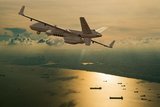
Elbit's announcement of a sale to a European country of its SkyStriker takes the number of known export customers to five. (Photo: Elbit Systems)
Elbit Systems has been awarded a $95 million contract to supply several hundred SkyStriker loitering munitions to a European country.


The contract is with an undisclosed country and will be carried out over a period of two years.
Shephard Defence Insight lists a unit price of $105,000 meaning the contract maybe for as many as 904 units but this does not take into account ancillary items like launchers, training and support so is likely to be substantially less than half that number.
SkyStriker is a fully autonomous loitering munition that can locate, acquire and engage operator-designated targets with a warhead of up to 10kg, enabling high-precision performance.
Related Articles
Paris Air Show: SkyStriker makes debut
UAVs, loitering munitions play significant role in latest Armenia-Azerbaijan clashes
The munition can be launched from a variety of ground and aerial platforms, including a dedicated canister on Elbit’s PULS (Precise and Universal Launching System) rocket artillery.
Equipped with an electric motor, the SkyStriker enables covert operations of up to 2h and with a range of 100km. It can use a number of warhead types and thanks to its modular design, it can be interchanged in the field during pre-flight according to the operational requirement.
SkyStriker has seen some success in Central Asia with sales to Azerbaijan, Turkmenistan and Uzbekistan and has also been sold to India.
In a further sign of Elbit’s efforts to establish itself in Europe, on 14 September the company and Europe’s KNDS signed an agreement to formalise their strategic cooperation to create a next-generation rocket artillery system, known as EuroPULS and a further development of PULS.
Related Programmes in Defence Insight
Related Equipment in Defence Insight



More from Air Warfare
-
![USAF eyes sensor and weapon upgrades as MH-139A Grey Wolf achieves IOC]()
USAF eyes sensor and weapon upgrades as MH-139A Grey Wolf achieves IOC
The Grey Wolf has entered operational service nearly three years later than originally planned, while new sustainment contracts indicate that some UH-1Ns could remain supported until 2031.
-
![How geopolitics and new military alliances are disrupting combat aircraft procurement]()
How geopolitics and new military alliances are disrupting combat aircraft procurement
Selection of fighter aircraft by national governments has always been political. As markets and allegiances shift against a background of global realignment, who will be the winners and losers as new entrants compete with established suppliers?
-
![Singapore’s interest in GCAP reflects its long-term approach to air power]()
Singapore’s interest in GCAP reflects its long-term approach to air power
A potential interest in joining GCAP is indicative of Singapore’s long-term and methodical approach to defence procurement and could benefit its local defence industry.
-
![Extending mission readiness: where XR adds real value in pilot, crew and maintenance training]()
Extending mission readiness: where XR adds real value in pilot, crew and maintenance training
Extended reality (XR) is becoming increasingly relevant in military aviation training, adding a flexible layer to an integrated ecosystem spanning the pilot, crew, and maintenance domains.
-
![US military tests AI-powered CUAS turret against drone swarms]()
US military tests AI-powered CUAS turret against drone swarms
As the US continues to invest heavily in counter-drone systems, demand for low-cost, mobile and autonomous technologies is on the rise, with Edda designed to align with these emerging requirements.
-
![August crewed air review: KC-390 momentum builds as demand in the tanker market grows]()
August crewed air review: KC-390 momentum builds as demand in the tanker market grows
The KC-390 is building a growing international operator base, but competition in the transport and tanker market is increasingly likely to depend on interoperability, commonality and the strength of supporting ecosystems. Meanwhile, Boeing’s KC-46 and Airbus’s A330 also gained ground in August.