ECRS takes first test flight on Spanish Eurofighter
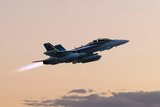
The contract for Typhoons will see Spain’s fleet grow to 90 aircraft by 2030. (Photo: Airbus)
The test flights follow Airbus’ integration of the radar into the Spanish Air Force’s ‘Halcon’ Typhoon fleet.


The Captor-E radar, an active electronically scanned array (AESA) antenna, has officially begun flight tests on board a Spanish Eurofighter Typhoon, Airbus has announced.
Also known as the European Common Radar System (ECRS), the ECRS Mk1 is being developed for the Spanish Halcon and German Quadriga Eurofighter modernisation projects.
Spain’s modernisation initiative includes the acquisition of 20 Eurofighter Typhoons to Tranche 4 configuration, which features the E-scan Mk1 AESA radar and upgraded software, signed in 2022.
Related Articles
ECRS Mk2 radar makes first flight on Eurofighter Typhoon
According to Airbus, the AESA features a mechanical repositioner to extend its field of view and provides enhanced detection capabilities for air-to-air and air-to-surface operations.
Development of the Mk2 variant – focusing on enhanced electronic warfare capabilities - is also already underway for the UK Royal Air Force. The Mk2 radar began ground tests in July 2024 and took flight for the first time at BAE Systems’ site in Warton, Lancashire in September 2024.
Related Programmes in Defence Insight
Related Equipment in Defence Insight


More from Air Warfare
-
![Pentagon’s 800% PAC-3 MSE surge faces production bottleneck as Patriot demand soars]()
Pentagon’s 800% PAC-3 MSE surge faces production bottleneck as Patriot demand soars
The Pentagon wants to procure 3,203 PAC-3 MSE interceptors in FY2027, but production constraints and international demand could impact efforts to rebuild depleted missile stocks.
-
![AIM-260 JATM deal puts Australia’s missile-industrial ambitions in focus]()
AIM-260 JATM deal puts Australia’s missile-industrial ambitions in focus
While a potentially accelerated acquisition timeline could strengthen the RAAF’s long-range air combat capability, Canberra’s continued reliance on US missile production is also put under the spotlight in parallel to its push to build a sovereign industry.
-
![Attack drones versus CUAS – the future of warfare or just another trend?]()
Attack drones versus CUAS – the future of warfare or just another trend?
Demand signals for counter-drone technology are strong and the market is becoming crowded, but is this really the beginning of a new phase of warfare or will commentators be talking about something else 10 years from now?