September crewed air review: established platforms retain their grip on the market
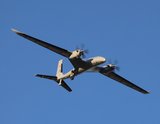
Saudi Arabia appears to be on course to acquire 48 Lockheed Martin F-35A Lightning II jets through a $24.3 billion FMS. (Photo: Lockheed Martin)
With many next-generation capabilities still years from operational readiness, several of the month’s largest developments demonstrated that governments remain willing to invest heavily in aircraft with proven capabilities and established support networks.


Across September, the most notable crewed air programme developments have shown the strength of existing platforms within the market. Established platforms can provide customers with proven capability, mature support networks and near-term availability, with the value of these features being reinforced through procurement decisions.
These attributes are not necessarily replicated by emerging capabilities, which may offer greater potential in the future but often come with less mature capability, support infrastructure and availability.
In the longer term, this tension between established and emerging technologies is likely to result in a prolonged period with future system investment growing alongside, rather than at the expense of,
Our news & analysis is now part of Defence Insight®
A Basic-level or higher Defence Insight subscription is now required to view this content.


More from Air Warfare
-
![AUSA 2026: New multiwarhead loitering munition enters increasingly competitive market]()
AUSA 2026: New multiwarhead loitering munition enters increasingly competitive market
Heaviside Industries has unveiled its new Tyr loitering munition at AUSA 2026 in Washington, DC, joining a growing field of manufacturers seeking to capitalise on billions of dollars in anticipated military spending.
-
![US military plans multi-UAV trials with Northrop Grumman quantum-navigated Lumberjack]()
US military plans multi-UAV trials with Northrop Grumman quantum-navigated Lumberjack
An undisclosed US military branch is preparing to evaluate multiple Lumberjack Group 3 drones equipped with SandboxAQ’s AQNav magnetic-navigation system. Shephard spoke with Northrop Grumman and SandboxAQ to find out more.
-
![Akinci: How Baykar turned the UAV into an African and Middle Eastern export success]()
Akinci: How Baykar turned the UAV into an African and Middle Eastern export success
From billion-dollar industrial partnerships in the Middle East to rapid military off-the-shelf deliveries in Africa, Baykar has tailored the Akinci to the needs of very different customers. Defence Insight data shows how flexibility, price and Turkish supply-chain independence have helped drive exports.