GKN Aerospace begins engine tests for drone design as part of contract signed in November
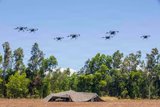
A contact for the development of the drone was signed in November 2025. (Photo: author)
A mock-up displayed by GKN Aerospace on 21 August is planned to have a maximum range between 600km and more than 1,000 km with a payload capacity of 100-300kg.


GKN Aerospace displayed a mock-up of a new uncrewed aerial vehicle (UAV) at the Swedish Armed Forces Air Show at Malmen Airbase Linköping in southern Sweden, a platform created less than a year after the development contract was placed in November 2025.
The unnamed UAV, developed under Project Otto through a SEK150 million (US$15.8 million) contract with the Swedish Defence Materiel Administration (FMV), is substantially an effort to see if a UAV of this kind can be developed from scratch with a new engine within 18 months.
Tests of the new turbojet engine have already been conducted, the number and nature
Our news & analysis is now part of Defence Insight®
A Basic-level or higher Defence Insight subscription is now required to view this content.



More from Air Warfare
-
![US Army extended-range CUAS missile ramjet work to continue through December 2029]()
US Army extended-range CUAS missile ramjet work to continue through December 2029
Northrop Grumman’s US$18.8 million XRC propulsion contract runs through December 2029, but performance targets and the pathway to operational fielding remain undisclosed.
-
![Saab’s GlobalEye gains ground as Canada’s aircraft procurement tilts towards Europe]()
Saab’s GlobalEye gains ground as Canada’s aircraft procurement tilts towards Europe
Canada’s interest in negotiating a procurement of Saab’s GlobalEye airborne early warning and control aircraft signals its readiness to reduce its reliance on US defence technology as trade tensions with its North American neighbour mount.
-
![US Air Force CCA programme to achieve multiple milestones in the coming months]()
US Air Force CCA programme to achieve multiple milestones in the coming months
The US Air Force is preparing to select mission-autonomy software, fire a missile from the FQ-42 Vengeance and test both CCA designs alongside crewed fighters at 2026 Emerald Flag.