Bulgaria approves second tranche of F-16C/D Block 70 fighter jets
Bulgaria is to acquire a fleet of 16 F-16C/D Block 70 fighter jets to replace ageing Mig-29s. (Photo: Lockheed Martin)
Bulgaria is to invest further in Lockheed Martin F-16C/D Block 70 fighter jets, acquiring eight more aircraft plus related equipment.


Bulgaria has formally approved funding of an additional eight Lockheed Martin F-16C/D Block 70 fighter jets at a cost of $1.3 billion.
The new investment, which also includes related weaponry, will lead to a full squadron of 16 aircraft eventually being operated, according to Dimitar Stoyanov, Bulgaria’s defence minister.
He also confirmed in a 21 September statement that deliveries of the second tranche of F-16s are to begin in 2027. Shephard previously reported that first the F-16 deliveries to Bulgaria are set to take place in 2025 with IOC expected in 2026.
The new jets are to be fitted with ‘advanced capabilities’ including Northrop Grumman’s APG-83 AESA radar, conformal fuel tanks, improved engine performance, an automatic ground collision avoidance system and an extended structural service life of 12,000h, according to Lockheed Martin company literature.
Approval of the additional aircraft was officially ratified during a Council of Ministers meeting which also saw Bulgaria decide to provide humanitarian aid to Ukraine. On that front, 350 medical kits are to be supplied to Kyiv.
Related Programmes in Defence Insight
Related Equipment in Defence Insight


More from Air Warfare
-
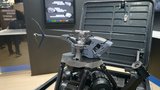
![Eurosatory 2026: First public flight of Teledyne FLIR Black Recon reconnaissance system]()
Eurosatory 2026: First public flight of Teledyne FLIR Black Recon reconnaissance system
The drone took flight as undisclosed European customers are testing the system. Defence Insight highlights the Nordic region and existing Black Hornet users as potential early customers amid growing demand for micro-UAVs.
-
![Eurosatory 2026: The H160M’s agnostic approach to drones draws global interest]()
Eurosatory 2026: The H160M’s agnostic approach to drones draws global interest
As Airbus Helicopters advances its H160M Guépard programme towards targeted first delivery in late 2028 for the French Army, the platform’s “agnostic” approach to drone integration could offer a window into how Western militaries are rethinking the relationship between crewed rotorcraft and uncrewed systems.
-
![Eurosatory 2026: Counter-drone moves into mainstream security market]()
Eurosatory 2026: Counter-drone moves into mainstream security market
Counter-drone technology is becoming a core requirement for European law enforcement and public security agencies as drone threats continue to evolve.