Boeing tests new MQ-25 Stingray software for crewed-uncrewed teaming
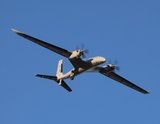
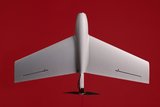
The MQ-25 Stingray is a carrier-based, long-endurance UAS that was designed to conduct aerial refuelling as a primary mission and provide ISR capability as a secondary mission. (Photo: Boeing)
The new software was said to significantly reduce the time it takes for an F/A-18 to communicate with an MQ-25.


Boeing has carried out updates and new tests with its crewed-uncrewed (also known as manned-unmanned or MUM-T) technology using a digital F/A-18 Super Hornet and MQ-25 Stingray.
The testing showed, Boeing claimed, that the software was maturing for future US Navy use and had the potential to deploy the teaming capability on both F/A-18 Block II and III Super Hornets.
In a simulator lab, a Boeing-led team virtually demonstrated an F/A-18 pilot commanding an MQ-25 UAS to release a refuelling drogue and refuel the Super Hornet, using existing communications links on both platforms.
In addition to the upgraded software, test teams pulled in hardware and datalinks already installed on both platforms to run the finalised software.
“MQ-25 is designed to typically receive commands from air vehicle pilots on an aircraft carrier. This software will add a second option, enabling pilots to initiate commands right from their cockpit,” said Alex Ewing, F/A-18 new product development lead at Boeing.
The software will significantly reduce the time it takes for an F/A-18 to communicate with an MQ-25, giving pilots greater flexibility in refuelling from longer distances, Boeing claimed.
Related Programmes in Defence Insight
Related Equipment in Defence Insight

More from Air Warfare
-
![Middle Eastern demand opens fresh export prospects for Lockheed Martin’s F-35 fighter jet]()
Middle Eastern demand opens fresh export prospects for Lockheed Martin’s F-35 fighter jet
A proposed Saudi Arabian purchase of 48 stealth fighters could signal a broader regional opportunity for the F-35 as European programmes mature.
-
![US military plans multi-UAV trials with Northrop Grumman quantum-navigated Lumberjack]()
US military plans multi-UAV trials with Northrop Grumman quantum-navigated Lumberjack
An undisclosed US military branch is preparing to evaluate multiple Lumberjack Group 3 drones equipped with SandboxAQ’s AQNav magnetic-navigation system. Shephard spoke with Northrop Grumman and SandboxAQ to find out more.
-
![Akinci: How Baykar turned the UAV into an African and Middle Eastern export success]()
Akinci: How Baykar turned the UAV into an African and Middle Eastern export success
From billion-dollar industrial partnerships in the Middle East to rapid military off-the-shelf deliveries in Africa, Baykar has tailored the Akinci to the needs of very different customers. Defence Insight data shows how flexibility, price and Turkish supply-chain independence have helped drive exports.
-
![US Pentagon pushes procurement of dismounted counter-UAS capabilities]()
US Pentagon pushes procurement of dismounted counter-UAS capabilities
The US services are investing in lighter, autonomous and networked systems to protect mobile troops from drone threats.