Bell pushes on with V-280
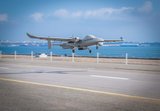
V-280 Valor tiltrotor aircraft. (Photo: Bell Textron)
Team Valor is applying lessons learned from a multiyear flight-test programme and Soldier Touchpoint events, in preparation for an RfP from the US Army for the Future Long-Range Assault Aircraft.


Bell Textron confirmed on 24 June that it is advancing the V-280 Valor programme to meet Future Long-Range Assault Aircraft (FLRAA) requirements for the US Army.
Having demonstrated the technical and operational characteristics of the tiltrotor aircraft, Bell and its Team Valor partners ‘are applying data-driven optimisations to deliver a reliable and sustainable long-range assault weapon system’ for the imminent programme of record competition, the company added.
The US Army is expected to release an RfP in Q3 2021. Team Valor faces competition from Boeing and Sikorsky, which are jointly offering the coaxial Defiant X.
Both teams received Competitive Design and Risk Reduction (CD&RR) Phase 2 awards on 31 March.
Bell stated that it is using CD&RR Phase 2 to provide initial preliminary designs for major subsystems and the conceptual weapons system, ‘based on data-proven performance that ensures transformational capabilities will be delivered in line with the Army’s schedule’.
A recently concluded three-year flight-test programme for the V-280 (including 15 sorties flown by US Army experimental test pilots) highlighted the aircraft’s low-speed agility, long-range cruise, 305kt high-speed flights and ‘rapid mission systems integration’, Bell claimed.
Additionally, Bell hosted Soldier Touchpoint events enabling critical feedback from pilots, mechanics, and infantry squads.
Related Programmes in Defence Insight
Future Long Range Assault Aircraft (FLRAA) (MV-75 Cheyenne II) [USA]
Related Equipment in Defence Insight


More from Air Warfare
-
![July drone digest: Sovereign production takes centre stage at Farnborough]()
July drone digest: Sovereign production takes centre stage at Farnborough
Farnborough International Airshow (FIA) 2026 revealed the growing scale of the UK’s uncrewed ambitions, with companies showcasing new CCA, autonomous wingmen and surveillance drones, while sovereign production emerged as a key factor for multiple programmes.
-
![July air forces review: Farnborough steals the headlines as programmes develop]()
July air forces review: Farnborough steals the headlines as programmes develop
The biannual Farnborough International Airshow 2026 was the backdrop in July for scores of deals, partnerships and announcements, including developments in the multinational next-generation Global Combat Air Programme and the UK’s $486 million trainer aircraft requirement.
-
![Maximise survivability with advanced electronic warfare (video)]()
Maximise survivability with advanced electronic warfare (video)
BAE Systems’ all-digital EW delivers 360-degree threat awareness in contested environments, boosts survivability, and cuts lifecycle costs.
-
![US Air Force seeks avionics upgrades for ageing T-38 Talon as T-7A Red Hawk delays persist]()
US Air Force seeks avionics upgrades for ageing T-38 Talon as T-7A Red Hawk delays persist
The USAF is looking for commercial avionics solutions to improve the T-38 Talon’s reliability, readiness and flight safety as continued T-7A Red Hawk delays increase the likelihood that the legacy trainer will remain in service longer than planned.
-
![British Army’s Project Corvus selection highlights new era of drone sovereignty]()
British Army’s Project Corvus selection highlights new era of drone sovereignty
The UK’s choice of the Tekever AR5 for Project Corvus reflects a wider shift in military drone procurement towards solutions that centre on sovereignty and domestic production, moving away from overseas reliance.