BAE Systems Phasa-35 UAS soars into the stratosphere
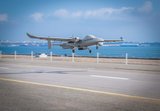
The Phasa-35 HAPS UAS in flight. (Photo: BAE Systems)
BAE Systems has achieved the first stratospheric flight of the Phasa-35 High Altitude Pseudo-Satellite (HAPS) uncrewed aerial system (UAS). Weighing 150kg, the drone flew to over 66,000ft in altitude and could offer long-endurance ISR and communication capabilities.


BAE Systems has completed the first stratospheric flight of the Phasa-35 HAPS UAS.
Weighing just 150kg and with the wingspan of a Boeing 737, the Phasa-35 completed the trial last month in New Mexico.
Over 24 hours, the HAPS UAS flew to over 66,000ft (20km) in altitude before successfully landing. The trials allowed engineers to measure the drone’s performance in the outer limits of Earth’s atmosphere.
The flight is a major milestone for the aircraft, development of which began in 2018 by Prismatic and BAE Systems. BAE Systems later acquired Prismatic in September 2019.
Phasa-35 can offer a persistent platform
Our news & analysis is now part of Defence Insight®
A Basic-level or higher Defence Insight subscription is now required to view this content.


More from Air Warfare
-
![FIA 2026: Bell highlights MOSA-driven growth path for MV-75 Cheyenne]()
FIA 2026: Bell highlights MOSA-driven growth path for MV-75 Cheyenne
Bell Flight’s modular open-systems approach for the US Army’s MV-75 Cheyenne could open doors for international allies and suppliers once locked out by closed rotorcraft architectures.
-
![Maximise survivability with advanced electronic warfare (video)]()
Maximise survivability with advanced electronic warfare (video)
BAE Systems’ all-digital EW delivers 360-degree threat awareness in contested environments, boosts survivability, and cuts lifecycle costs.
-
![US Air Force seeks avionics upgrades for ageing T-38 Talon as T-7A Red Hawk delays persist]()
US Air Force seeks avionics upgrades for ageing T-38 Talon as T-7A Red Hawk delays persist
The USAF is looking for commercial avionics solutions to improve the T-38 Talon’s reliability, readiness and flight safety as continued T-7A Red Hawk delays increase the likelihood that the legacy trainer will remain in service longer than planned.
-
![British Army’s Project Corvus selection highlights new era of drone sovereignty]()
British Army’s Project Corvus selection highlights new era of drone sovereignty
The UK’s choice of the Tekever AR5 for Project Corvus reflects a wider shift in military drone procurement towards solutions that centre on sovereignty and domestic production, moving away from overseas reliance.