Australia orders 20 C-130Js to replace and expand current RAAF fleet
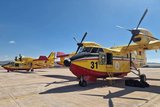
The RAAF operates 12 C-130Js. (Photo: Australian DoD)
The Royal Australian Air Force’s fleet of Lockheed Martin C-130J transport aircraft will be renewed by a $6.6 billion order for 20 new aircraft.


The Royal Australian Air Force’s (RAAF’s) transport capability will be substantially boosted by an Australian DoD order of 20 new C-130J Hercules aircraft under a AUD9.8 billion ($6.6 billion) contract announced on 24 July.
The new acquisitions will replace and expand upon the 12 Hercules aircraft currently operated by the air force with delivery of the first aircraft expected from late 2027.
The current fleet of C-130Js operated by the RAAF have been heavily used, taking part in almost every Australian defence operation since entering service, including Bougainville assistance and Timor-Leste peacekeeping through to conflicts in Iraq and Afghanistan.
Related Articles
Boeing, Royal Australian Air Force graduate 1st locally trained C-17 pilots
Farnborough 2010: Lockheed Martin looks to sell another 250 C-130J
Boeing, RAAF complete 1st year of in-country C-17 pilot training
More recently the aircraft supported Australia’s response to COVID-19 in the region, delivering vaccines and medical supplies, as well as bushfire and flood response.
The aircraft will continue to be operated by the 37th Squadron at RAAF Base Richmond in NSW.
Shephard Defence Insight notes that the newest contract will take the number ordered to 334 with 241 delivered.
It has been ordered by 21 countries.
Australia bought 12 C-130Js under Project Air 5216 in 1995 and deliveries were completed in 2000 with an out-of-service date of 2039.
Related Equipment in Defence Insight

More from Air Warfare
-
![Could the next UAS market boom take place beyond the battlefield?]()
Could the next UAS market boom take place beyond the battlefield?
While the headlines remain dominated by the use of drones for combat operations in Ukraine and other conflicts, there are emerging use cases where the technology could usefully feed back into areas and missions outside the war zone.
-
![USAF eyes sensor and weapon upgrades as MH-139A Grey Wolf achieves IOC]()
USAF eyes sensor and weapon upgrades as MH-139A Grey Wolf achieves IOC
The Grey Wolf has entered operational service nearly three years later than originally planned, while new sustainment contracts indicate that some UH-1Ns could remain supported until 2031.
-
![Extending mission readiness: where XR adds real value in pilot, crew and maintenance training]()
Extending mission readiness: where XR adds real value in pilot, crew and maintenance training
Extended reality (XR) is becoming increasingly relevant in military aviation training, adding a flexible layer to an integrated ecosystem spanning the pilot, crew, and maintenance domains.
-
![US military tests AI-powered CUAS turret against drone swarms]()
US military tests AI-powered CUAS turret against drone swarms
As the US continues to invest heavily in counter-drone systems, demand for low-cost, mobile and autonomous technologies is on the rise, with Edda designed to align with these emerging requirements.