Australia wins approval from US for 100 AGM-88G missiles
Royal Australian Air Force F-35A Lightning II can carry AGM-88G AARGM-ER missiles internally. (Photo: Australian DoD)
All Australia’s fixed-wing fighter aircraft can carry the missiles and work has been underway to investigate the use of the missile from P-8A MPAs which are also operated by Australia.


Australia is set to buy up to 100 AGM-88G Advanced Anti-Radiation Guided Missiles-Extended Range (AARGM-ER) under a US$405 million request from the country which has been approved by the US State Department.
The Foreign Military Sale (FMS) contract also includes up to 24 AGM-88G AARGM-ER guidance sections (spares) and up to 24 AGM-88G AARGM-ER control sections (spares), as well as missile containers, component parts, support actions and training.
The approval described Australia as one of the US’s “most important allies in the Western Pacific and the sale will significantly ensure peace and economic stability in the [region] and is vital to the US national interest in developing and maintaining a strong and ready self-defence capability”.
In February last year, the US State Department approved a potential FMS worth US$506 million covering up to 63 AARGM-ER missiles, 20 training rounds and associated equipment for Australia.
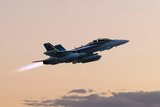
The missile can be operated from a range of aircraft operated by the Royal Australian Air Force (RAAF) such as the F/A-18E/F and EA-18G and the F-35A, also operated by the RAAF, can carry it internally.
Direct and Time-Sensitive Strike (PMA-242) of the US Navy has also been exploring integration of the AARGM-ER onto P-8 Poseidon maritime patrol aircraft which is also operated by Australia.
Related Equipment in Defence Insight


More from Air Warfare
-
![Pentagon’s 800% PAC-3 MSE surge faces production bottleneck as Patriot demand soars]()
Pentagon’s 800% PAC-3 MSE surge faces production bottleneck as Patriot demand soars
The Pentagon wants to procure 3,203 PAC-3 MSE interceptors in FY2027, but production constraints and international demand could impact efforts to rebuild depleted missile stocks.
-
![AIM-260 JATM deal puts Australia’s missile-industrial ambitions in focus]()
AIM-260 JATM deal puts Australia’s missile-industrial ambitions in focus
While a potentially accelerated acquisition timeline could strengthen the RAAF’s long-range air combat capability, Canberra’s continued reliance on US missile production is also put under the spotlight in parallel to its push to build a sovereign industry.
-
![Attack drones versus CUAS – the future of warfare or just another trend?]()
Attack drones versus CUAS – the future of warfare or just another trend?
Demand signals for counter-drone technology are strong and the market is becoming crowded, but is this really the beginning of a new phase of warfare or will commentators be talking about something else 10 years from now?