Argentina evaluates fast jet options
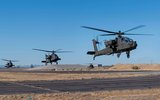
Argentina lost its supersonic capacity in 2015 after retiring its fleet of Mirage jets. (Photo: Argentinian MoD)
Buenos Aires initially intended to purchase Chinese/Pakistani JF-17 Thunder Block III fighters, but is now analysing five alternative options.


After more than five years without supersonic aircraft, the Argentinian MoD has allocated $664 million of its 2022 budget to acquire 12 new fighters for the national air force.
Although the country initially intended to purchase Chinese/Pakistani JF-17 Thunder Block III jets, it reconsidered and is currently analysing five options.
Capt Hernán Bornices, spokesperson for the Argentinian Air Force (FAA), confirmed to Shephard that the project is currently in its early stages, and a comparative study has been carried out.
As he explained, the five options were put under analysis regardless of the country of origin, with the aim being to
Our news & analysis is now part of Defence Insight®
A Basic-level or higher Defence Insight subscription is now required to view this content.


You may also like
More from Air Warfare
-
![Saab’s flight-tested AI agents signal new era of crewed-uncrewed fighter systems]()
Saab’s flight-tested AI agents signal new era of crewed-uncrewed fighter systems
Saab is developing artificial intelligence (AI) agents for crewed and uncrewed aircraft, targeting potential operational deployment within months, while expanding its training capabilities, partnerships and ambitions for wider military applications.
-
![October crewed air review: Israel’s Apache deal bets on crewed aviation in an uncrewed age]()
October crewed air review: Israel’s Apache deal bets on crewed aviation in an uncrewed age
Israel’s $1 billion Apache helicopter order highlights the continued demand for crewed attack aviation, while growing integration with uncrewed systems could shape future modernisation and procurement decisions.
-
![US Navy keeps Super Hornet production restart option open, but without defined cost or timetable]()
US Navy keeps Super Hornet production restart option open, but without defined cost or timetable
The US Navy plans to preserve Super Hornet and Growler tooling as production winds down, with restart costs unassessed and final F/A-18 deliveries expected in late 2027.
-
![Connecting the layers: how networks can secure the future of European air defence]()
Connecting the layers: how networks can secure the future of European air defence
The rise of drones has reshaped the threat landscape for all European militaries. For industry, future defensive strategies must carefully balance a mix of passive and active measures to address the evolving danger, based around a highly integrated and responsive network of sensors and effectors.
-
![October drone digest: France and Lithuania advance loitering munition procurements as global spending surges]()
October drone digest: France and Lithuania advance loitering munition procurements as global spending surges
Recent procurement developments in France and Lithuania highlight the growing demand for loitering munitions, with global annual spending forecast to increase nearly 50-fold between 2020 and 2029.
-
![Germany could secure greater influence through sixth-generation fighter partnership with Sweden and Spain]()
Germany could secure greater influence through sixth-generation fighter partnership with Sweden and Spain
Germany is assessing potential pathways for a future sixth-generation fighter capability, including discussions with GCAP partners and Sweden.