Angola receives first Airbus C295
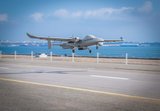
The first of three Airbus C295s ordered by Angola in 2022 has arrived in the African country. (Photo: Airbus)
The first of three aircraft ordered is in transport configuration with the remaining aircraft to be configured for maritime patrol.


Angola has received the first of three Airbus C295 aircraft ordered in April 2022. It has been configured for transport missions and will be able to carry out tactical cargo and troop transport tasks, paratrooping, load dropping or humanitarian missions.
The other two aircraft will be delivered in maritime patrol configuration with all three equipped with the Collins Aerospace Pro Line Fusion avionics suite. The maritime patrol variant will be fitted with the Airbus-developed Fully Integrated Tactical System (FITS) mission system and other sensors.
At the time of the order Angola became the 10th African operator of the aircraft with a total of 44 aircraft on the continent. In total, 35 countries have ordered or fly the aircraft and 258 have been ordered, with approximately 182 delivered.
Equipped with retractable landing gear, a pressurised structure and short take-off and landing capabilities, the C295 can operate in austere locations.
Low fuel consumption and long endurance also ensure reduced operating costs and, thanks to its light footprint, the C295 can operate from soft (CBR2) unprepared airstrips.
The baseline variant has a 12.7m-long unobstructed cabin that can be used to transport 71 personnel or accommodate up to five standard 463L pallets.
Related Programmes in Defence Insight
Related Equipment in Defence Insight



More from Air Warfare
-
![July drone digest: Sovereign production takes centre stage at Farnborough]()
July drone digest: Sovereign production takes centre stage at Farnborough
Farnborough International Airshow (FIA) 2026 revealed the growing scale of the UK’s uncrewed ambitions, with companies showcasing new CCA, autonomous wingmen and surveillance drones, while sovereign production emerged as a key factor for multiple programmes.
-
![FIA 2026: Bell highlights MOSA-driven growth path for MV-75 Cheyenne]()
FIA 2026: Bell highlights MOSA-driven growth path for MV-75 Cheyenne
Bell Flight’s modular open-systems approach for the US Army’s MV-75 Cheyenne could open doors for international allies and suppliers once locked out by closed rotorcraft architectures.
-
![Maximise survivability with advanced electronic warfare (video)]()
Maximise survivability with advanced electronic warfare (video)
BAE Systems’ all-digital EW delivers 360-degree threat awareness in contested environments, boosts survivability, and cuts lifecycle costs.
-
![US Air Force seeks avionics upgrades for ageing T-38 Talon as T-7A Red Hawk delays persist]()
US Air Force seeks avionics upgrades for ageing T-38 Talon as T-7A Red Hawk delays persist
The USAF is looking for commercial avionics solutions to improve the T-38 Talon’s reliability, readiness and flight safety as continued T-7A Red Hawk delays increase the likelihood that the legacy trainer will remain in service longer than planned.
-
![British Army’s Project Corvus selection highlights new era of drone sovereignty]()
British Army’s Project Corvus selection highlights new era of drone sovereignty
The UK’s choice of the Tekever AR5 for Project Corvus reflects a wider shift in military drone procurement towards solutions that centre on sovereignty and domestic production, moving away from overseas reliance.