The potential impact of US tariffs on the F-35A
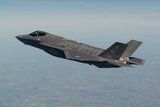
The F-35 features advanced stealth capabilities. (Photo: Lockheed Martin)
The Trump administration’s proposed tariffs have raised questions on the desirability and feasibility of the F-35A for key US allies including Canada and Switzerland. With combined orders amounting to 126 units, both nations undertook reviews of their ongoing fighter programmes.


The F-35A Lightning II is a fifth-generation multirole combat aircraft with CTOL capabilities. It is a multinational programme led by the US Department of Defense (DoD), bringing together the US Air Force (USAF), US Marine Corps (USMC), US Navy (USN) and seven partner nations: Australia, Canada, Denmark, Italy, the Netherlands, Norway and the UK.
Since the start of the Trump administration and its associated tariffs, F-35 deals were called into question by governments across the globe, particularly by Canada and Switzerland. Nonetheless, as the end of the year approaches, concerns seem to have been quelled, and orders remain in place and on track.
Developer Lockheed Martin, however, has made a point to emphasise the role of Europe in the F-35 supply chain, citing the continent’s contribution to the fighter programme as greater than 25% during a briefing at Paris Air Show 2025. According to leadership at the manufacturer, the F-35 is made up of horizontal tails from Belgium, a centre fuselage from Germany and hopefully mission systems from the UK.
Related Articles
Paris Air Show 2025: Lockheed says TR-3 upgrade “closing in” on completion
F-35 buy decisions rear their head after US tariffs increase
Technological upgrades
During an F-35A briefing by Lockheed Martin at the 2025 Paris Air Show, company leaders announced that the Technology Refresh 3 (TR-3) has achieved a stable configuration for combat support and is only awaiting US government validation for one remaining function.
According to various media reports, Lockheed Martin is aiming to make the F-35 optionally piloted within the next three years, likely through the use of AI systems. If successful, the F-35 would become the first fifth-generation aircraft to be able to fly autonomously.
Customers
The F-35 is operated by 20 nations globally, with most customers being in North America and Europe. The fighter has long been representative of both the strength of American defence technology and a collaboration between the US and its European allies.
| Ordered | Delivered | Inventory | OSD | |
|---|---|---|---|---|
 AUSTRALIA AUSTRALIA | 72 | 72 | 72 | 2039 |
 BELGIUM BELGIUM | 34 | 8 | 8 | 2050 |
 CANADA CANADA | 88 | 0 | 0 | 2050 |
 CZECH REPUBLIC CZECH REPUBLIC | 24 | 0 | 0 | 2056 |
 DENMARK DENMARK | 27 | 15 | 15 | 2048 |
 FINLAND FINLAND | 64 | 0 | 0 | 2050 |
 GERMANY GERMANY | 35 | 0 | 0 | 2051 |
 GREECE GREECE | 20 | 0 | 0 | 2053 |
 ITALY ITALY | 60 | 24 | 24 | 2040 |
 JAPAN JAPAN | 105 | 39 | 39 | 2041 |
 SOUTH KOREA SOUTH KOREA | 40 | 40 | 40 | 2044 |
 NETHERLANDS NETHERLANDS | 52 | 40 | 40 | 2038 |
 NORWAY NORWAY | 52 | 52 | 52 | 2042 |
 POLAND POLAND | 32 | 0 | 0 | 2051 |
 ROMANIA ROMANIA | 32 | 0 | 0 | U |
 SINGAPORE SINGAPORE | 8 | 0 | 0 | 2055 |
 SWITZERLAND SWITZERLAND | 36 | 0 | 0 | 2052 |
 USA USA | 1763 | 424 | 424 | 2036 |
OSD = Out of Service Date
U = Unverified
However, the Trump administration’s proposed tariffs have arguably jeopardised the desirability of the programme on a financial level, namely for Canada and Switzerland, whose combined orders amount to 126 aircraft.
Canada
On 9 January 2023, it was announced that Canada had signed a contract to procure 88 F-35 aircraft to replace its CF-18 jets in service. Deliveries were expected between 2025 and 2032, with a first delivery now anticipated for 2026.
According to the Canadian Auditor General (A-G), Canada’s planned acquisition of 88 F-35 fighters will cost at least 45% more than originally planned due to significant delays and other “shortcomings” as cited in a report published on 10 June 2025. The A-G estimated an US$8.70 billion increase in programme costs from initial estimates.
On 25 June 2025, Canadian Prime Minister Mark Carney announced that a review of Canada’s F-35A order would be undertaken and completed at the end of the summer as a result of trade tensions and tariffs from the Trump administration.
According to reports published in mid-August 2025, Canadian defence officials have made a strong case to keep the nation’s existing order for 88 F-35A aircraft without making a formal recommendation. An anonymous source speaking to Reuters, however, said the final decision lies with Mark Carney’s liberal administration. Canada has made no official comment on the topic.
In October 2025, Canada confirmed it would go ahead with the first batch of 16 aircraft; however, the remaining 72 are still under consideration.
Switzerland
A contract for 36 aircraft was signed on 19 September 2022 between Bern’s armaments director Martin Sonderegger and F-35 programme manager Darko Savic. At least 24 aircraft will be manufactured at Leonardo’s FACO in Cameri, Italy. Deliveries are set to take place between 2027 and 2030.
The procurement cost for 36 F-35As is estimated to be around $2.58 billion, with the total programme expected to be worth around $6.07 billion.
According to various media reports published at the end of June 2025, Switzerland and the US are in a dispute over the price of the contracted F-35 aircraft, and the US Defence Security Cooperation Agency (DSCA) would like Switzerland to assume all additional costs resulting from inflation. The Swiss National Armaments Director has estimated that new costs would add between $650 million and $1.30 billion.
Switzerland has remained firm that the original agreed price is what will be paid.
According to a report published by Bloomberg in August 2025, a growing number of Swiss lawmakers are intent on cancelling the F-35A contract as a result of President Trump’s decision to impose a 39% tariff on Swiss exports.
Despite ongoing tensions due to increased unit costs, an Armasuisse (Federal Office for Defence Procurement) spokesperson revealed on 6 September that deliveries of the F-35A will continue for mid-2027, indicating the deal is still on the table.
Related Programmes in Defence Insight
Swiss Air 2030 - Combat Aircraft [Switzerland]
Future Fighter Capability Project [Canada]
Related Equipment in Defence Insight


More from Air Warfare
-
![The new generation of defence companies emerging from the US UAV boom]()
The new generation of defence companies emerging from the US UAV boom
As the Pentagon accelerates procurement of low-cost, lethal UAVs through its Drone Dominance Program, emerging suppliers will need to demonstrate manufacturing capacity, supply chain resilience and reliability.
-
![Sophistication versus simplification: the divided future of air-to-air missiles]()
Sophistication versus simplification: the divided future of air-to-air missiles
As global air combat operations continue to evolve at a rate not seen for decades, what will the next generation of air-to-air weapons look like, and what missions will they need to fulfil?
-
![AUSA 2026: New multiwarhead loitering munition enters increasingly competitive market]()
AUSA 2026: New multiwarhead loitering munition enters increasingly competitive market
Heaviside Industries has unveiled its new Tyr loitering munition at AUSA 2026 in Washington, DC, joining a growing field of manufacturers seeking to capitalise on billions of dollars in anticipated military spending.
-
![US military plans multi-UAV trials with Northrop Grumman quantum-navigated Lumberjack]()
US military plans multi-UAV trials with Northrop Grumman quantum-navigated Lumberjack
An undisclosed US military branch is preparing to evaluate multiple Lumberjack Group 3 drones equipped with SandboxAQ’s AQNav magnetic-navigation system. Shephard spoke with Northrop Grumman and SandboxAQ to find out more.