Bayraktar TB2: The $4.11 billion market success of a cost-effective MALE UAV
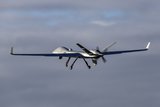
The Bayraktar TB2 is a MALE armed UAV that is estimated to be operated by more than 30 countries. (Photo: Baykar)
The success of the Bayraktar TB2 stems from it fulfilling a niche of providing reasonable capabilities at a low cost, leading to its acquisition by more than 30 countries including many in Africa; but there are reasons to be cautious about its potential future prospects.


The Bayraktar TB2 market is worth an estimated US$10.17 billion, with $4.11 billion already spent on the capability to date, leaving a potential $6.06 billion unawarded, according to research from Shephard Defence Insight.
Manufactured by Turkish defence company Baykar, the TB2 is one of the most widely used medium-altitude long-endurance (MALE) uncrewed aerial vehicles (UAVs) globally, with the total spending on the drone to date being split between the 31 countries that operate it.
Turkey unsurprisingly has the largest fleet, with the country estimated to have acquired a total of 151 aircraft since first adding them to the inventories of the Turkish Armed Forces and the Gendarmerie in 2014.
Related Articles
TB2 enrages Russia and reiterates its value to Ukraine
The third- and fifth-largest TB2 customers, by the number of units acquired, are Nigeria and Libya. Nigeria’s 43-drone order was confirmed to local media by a senior spokesperson of the Nigerian Armed Forces in November 2024, two years after photographs emerged online showing the TB2 adorned with Nigeria’s flag.
Libya’s purchase of the drone was never confirmed; however, various evidence shows that the Government of National Accord (GNA) used it against the Libyan National Army (LNA) in 2019 and 2020. Based on the number of drones lost during these engagements, Shephard estimates that the GNA had acquired 20 TB2s for a total of $107.6 million.
Perhaps the best-known TB2 customer is its second-largest: Ukraine. The Ukrainian Army signed a $69 million deal in 2019, while the Ukrainian Navy reportedly signed a contract for the drones in 2021, meaning both contracts were signed before Russia’s full-scale invasion began in 2022. The war in Ukraine appears to have accelerated the delivery of the aircraft already ordered.
Following the invasion, many more TB2s were delivered to Ukraine. These were funded through various streams, including aid from Baykar and crowdfunding campaigns. Based on various sources, last year Shephard estimated that Ukraine had received 40 TB2s since Russia’s invasion began, which added to its pre-war inventory of 36 aircraft. Several of these have since been lost.
Cheap enough and good enough
The role of the TB2 in the Russo-Ukrainian war is important, as it highlights a key reason for the drone’s success: it is cheap enough and good enough.
Several countries have acquired military off-the-shelf (MOTS) versions of the TB2. Based on known contract values, Shephard estimates that these aircraft versions have a gross unit cost of $5.38 million, which is well below the unit costs of other armed MALE UAVs. Even bespoke versions of the platform, such as the one acquired by Poland, have a relatively low unit cost, estimated at $11.17 million, according to figures from the Polish government.
Despite its comparatively low cost, the UAV has proved effective in specific environments. For example, it was used successfully in the early stages of Russia’s full-scale invasion of Ukraine in early 2022, notably in the striking and sinking of the Moskva, which built on its published effectiveness in the Nagorno-Karabakh conflict, as Shephard reported in 2022. These successes, however, took place on battlefields with substandard air defence, with the drone’s effectiveness becoming much more limited as the conflict in Ukraine advanced.
With these two facets, the niche of the TB2 becomes clear: a drone that is comparatively low-cost but effective in certain situations, which is sufficient to attract customers.
These factors unsurprisingly mean the drone holds greater appeal for less wealthy nations. More than four-fifths (83.9%) of TB2 operators are located outside the top 50 countries by GDP, according to the IMF.
Notably, the UAV has proved successful in Africa, as highlighted by Nigeria and Libya’s purchases of an estimated 43 and 20 TB2s, respectively. Customers from the continent account for more than one-third of all TB2 customers, with buyers in Africa having placed an estimated 142 TB2 drone orders, surpassing orders from Europe and Asia.
Reasons to be cautious
Despite the total TB2 market valuation of $10.17 billion and the $6.06 million in unawarded procurements that the Bayraktar TB2 could win, these figures must be viewed cautiously.
As mentioned above, $4.11 billion has already been spent acquiring the capability. While this figure includes orders that have been signed, $1.9 billion worth of TB2 procurements have been cancelled, with Serbia, Rwanda and Latvia pulling out of first-time deals, and the UAE and Morocco cancelling drone procurements to add to their existing TB2 fleets.
Based on these figures, 46.2% of the value of the procurement programmes in which the TB2 was involved was not awarded. If this figure is applied to the additional $6.06 million forecast in open TB2 procurements, it can be estimated that only $3.26 million will be awarded, leaving $2.8 million likely never to be spent; instead, it will likely be reassigned from cancelled TB2 procurements to other material purchases.
There is also evidence to suggest that the TB2 has had its day. The graph below shows the $3.33 billion that is estimated to be allocated to procuring the drone and its core systems annually between 2017 and 2027. As shown, annual spending on the TB2 rose year-on-year until 2020, when the Covid-19 pandemic dramatically reduced spending on the aircraft.
An estimated $381.3 million was spent on the aircraft in 2021, however, representing a threefold increase over 2020. TB2 spending peaked at $551 million in 2022, with the Russia-Ukraine conflict prompting some nations, such as Poland, to buy the aircraft as an immediate deterrent against Russia.
Spending remained high in 2023, 2024 and 2025, but is estimated to reduce in 2026 to $224.9 million – nearly half of the previous year’s spending – before being forecast to fall again to $134.9 million in 2027, which is below the estimated annual spending on the aircraft in 2017.
This data suggests that the drone’s peak time has passed, with many nations – even those with less mature drone industries – appearing to choose to develop domestic UAVs rather than import MOTS models.
Related Programmes in Defence Insight
Bayraktar TB2 (Pre-War) [Ukraine Army]
Related Equipment in Defence Insight

More from Air Warfare
-
![India’s military integration drive faces interoperability hurdles]()
India’s military integration drive faces interoperability hurdles
Senior military leaders have highlighted the need for interoperable systems, common data standards and closer cooperation between India's armed services.
-
![UK A400M Saudi deployment highlights airlifter’s role as Airbus pursues upgrades]()
UK A400M Saudi deployment highlights airlifter’s role as Airbus pursues upgrades
Airbus is developing new capabilities for its A400M transport aircraft as European countries consider future airlift requirements and the UK plans to deploy the aircraft to Saudi Arabia.
-
![The new generation of defence companies emerging from the US UAV boom]()
The new generation of defence companies emerging from the US UAV boom
As the Pentagon accelerates procurement of low-cost, lethal UAVs through its Drone Dominance Program, emerging suppliers will need to demonstrate manufacturing capacity, supply chain resilience and reliability.